Marine Steel Pipe Wall Thickness Guide: SCH 40 vs SCH 80
Ships navigate complex marine environments, constantly facing challenges such as salt spray, high pressure, vibration, and temperature fluctuations. Marine seamless steel pipes, acting as the "blood vessels" of a ship's systems, have their wall thickness selection directly impacting navigational safety, operational efficiency, and cost control.
Among numerous wall thickness standards, SCH 40 and SCH 80 are the two most commonly used specifications. Many marine engineers and procurement personnel are confused: what are the differences between them? How should they be selected for different scenarios?
The numbers after SCH (40, 80) do not directly represent the specific numerical value of the steel pipe wall thickness, but rather a standardized pressure rating mapping mechanism derived from the ASME B36.10M international standard. It represents the scaled result of the ratio of design pressure to allowable material stress.
For marine steel pipes, SCH 40 and SCH 80 pipes with the same nominal diameter (NPS) have identical outer diameters. This means they can use the same flanges, valves, elbows, and other fittings without requiring additional replacement parts, greatly improving engineering compatibility and ease of maintenance. The core differences between the two lie in wall thickness, pressure resistance, weight, and applicable scenarios.
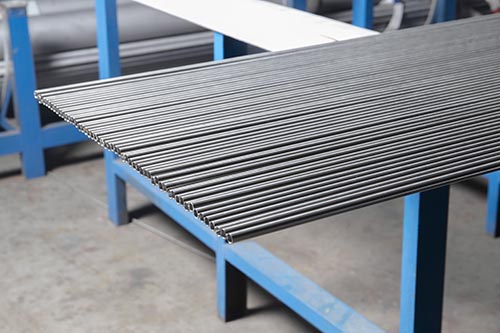
SCH 40 vs SCH 80 steel pipe
Wall thickness and pressure resistance are the core differences between SCH 40 and SCH 80 steel pipes. The larger the pipe diameter, the more significant the difference in wall thickness. For the same pipe diameter, the wall thickness of SCH 80 is nearly 42% greater than that of SCH 40, resulting in a more than 40% increase in its ultimate pressure resistance and superior impact and vibration resistance.
Their failure modes also differ: SCH 40 is prone to axial brittle tearing, while SCH 80 exhibits a clear deformation warning before failure, providing a higher safety factor. Both steel pipes meet the minimum wall thickness specifications for marine piping from classification societies, but only SCH 80 offers a greater safety margin.
SCH 80 steel pipes have a thicker wall, resulting in a nearly 42% increase in weight per unit length compared to SCH 40 for the same specifications. This directly increases material procurement and logistics costs. The greater weight also increases the difficulty of hoisting and welding, reducing operational efficiency and requiring stronger support supports. However, the higher structural rigidity reduces the number of supports needed, offsetting some installation costs and creating a trade-off between cost and ease of installation.
Marine steel pipes are constantly exposed to seawater and salt spray corrosion. According to IMO standards, different piping systems require a fixed corrosion allowance. SCH 80's ample natural wall thickness provides a larger corrosion allowance, making it suitable for high-corrosion conditions such as hull-side applications and seawater cooling, resulting in a longer service life. SCH 40, on the other hand, has a limited wall thickness allowance, requiring additional anti-corrosion coatings. In critical scenarios such as ballast pipes, additional corrosion allowance is needed; otherwise, wall thickness loss can easily lead to leakage risks.
How to Choose it
Marine piping conditions are complex. The core selection principle is: suitable for the operating conditions, balancing safety and cost.
SCH 40 stainless steel pipe is suitable for: low- and medium-pressure, non-critical piping. It offers high cost-effectiveness and easy installation, making it suitable for general piping with low pressure and weak corrosion: domestic freshwater and drinking water piping, cabin ventilation and low-pressure hydraulic piping, deck drainage and general sewage, etc. In open, highly corrosive environments, corrosion protection is required, and wall thickness can be appropriately reduced, but must not be lower than the classification society's minimum wall thickness standard.
SCH 80 seamless pipe is suitable for: high-pressure, highly corrosive, critical safety piping. It is suitable for high-pressure, highly corrosive, high-vibration, and navigationally critical core piping: high-pressure fluid piping such as main engine cooling, fuel supply, and high-pressure steam; highly corrosive piping such as those outside the ship's hull, bilge, ballast, and through-tank areas; safety-critical piping such as fire fighting and emergency cooling; when used for offshore platform risers, it must also meet NACE MR0175 certification requirements.
Original source: https://www.marinesteelpipe.com/a/marine-steel-pipe-wall-thickness-guide-sch-40-vs-sch-80.html
Prev: Marine Stainless Steel Pipe Diameter Chart
Next: Stainless Steel Pipes for Shipbuilding
Related Product
Ships navigate complex marine environments, constantly facing challenges such as salt spray, high pressure, vibration, and temperature fluctuations. Marine seamless steel pipes, acting as the "blood vessels" of a ship's systems, have their wall thickness selection directly impacting navigational safety, operational efficiency, and cost control.
Among numerous wall thickness standards, SCH 40 and SCH 80 are the two most commonly used specifications. Many marine engineers and procurement personnel are confused: what are the differences between them? How should they be selected for different scenarios?
The numbers after SCH (40, 80) do not directly represent the specific numerical value of the steel pipe wall thickness, but rather a standardized pressure rating mapping mechanism derived from the ASME B36.10M international standard. It represents the scaled result of the ratio of design pressure to allowable material stress.
For marine steel pipes, SCH 40 and SCH 80 pipes with the same nominal diameter (NPS) have identical outer diameters. This means they can use the same flanges, valves, elbows, and other fittings without requiring additional replacement parts, greatly improving engineering compatibility and ease of maintenance. The core differences between the two lie in wall thickness, pressure resistance, weight, and applicable scenarios.
SCH 40 vs SCH 80 steel pipe
Wall thickness and pressure resistance are the core differences between SCH 40 and SCH 80 steel pipes. The larger the pipe diameter, the more significant the difference in wall thickness. For the same pipe diameter, the wall thickness of SCH 80 is nearly 42% greater than that of SCH 40, resulting in a more than 40% increase in its ultimate pressure resistance and superior impact and vibration resistance.
Their failure modes also differ: SCH 40 is prone to axial brittle tearing, while SCH 80 exhibits a clear deformation warning before failure, providing a higher safety factor. Both steel pipes meet the minimum wall thickness specifications for marine piping from classification societies, but only SCH 80 offers a greater safety margin.
SCH 80 steel pipes have a thicker wall, resulting in a nearly 42% increase in weight per unit length compared to SCH 40 for the same specifications. This directly increases material procurement and logistics costs. The greater weight also increases the difficulty of hoisting and welding, reducing operational efficiency and requiring stronger support supports. However, the higher structural rigidity reduces the number of supports needed, offsetting some installation costs and creating a trade-off between cost and ease of installation.
Marine steel pipes are constantly exposed to seawater and salt spray corrosion. According to IMO standards, different piping systems require a fixed corrosion allowance. SCH 80's ample natural wall thickness provides a larger corrosion allowance, making it suitable for high-corrosion conditions such as hull-side applications and seawater cooling, resulting in a longer service life. SCH 40, on the other hand, has a limited wall thickness allowance, requiring additional anti-corrosion coatings. In critical scenarios such as ballast pipes, additional corrosion allowance is needed; otherwise, wall thickness loss can easily lead to leakage risks.
How to Choose it
Marine piping conditions are complex. The core selection principle is: suitable for the operating conditions, balancing safety and cost.
SCH 40 stainless steel pipe is suitable for: low- and medium-pressure, non-critical piping. It offers high cost-effectiveness and easy installation, making it suitable for general piping with low pressure and weak corrosion: domestic freshwater and drinking water piping, cabin ventilation and low-pressure hydraulic piping, deck drainage and general sewage, etc. In open, highly corrosive environments, corrosion protection is required, and wall thickness can be appropriately reduced, but must not be lower than the classification society's minimum wall thickness standard.
SCH 80 seamless pipe is suitable for: high-pressure, highly corrosive, critical safety piping. It is suitable for high-pressure, highly corrosive, high-vibration, and navigationally critical core piping: high-pressure fluid piping such as main engine cooling, fuel supply, and high-pressure steam; highly corrosive piping such as those outside the ship's hull, bilge, ballast, and through-tank areas; safety-critical piping such as fire fighting and emergency cooling; when used for offshore platform risers, it must also meet NACE MR0175 certification requirements.