Seamless SS Pipe VS Welded Steel Tube
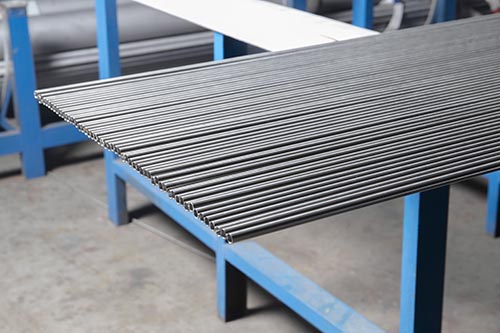
Seamless stainless steel pipes are manufactured using solid stainless steel round billets as raw materials. Through multiple processes such as heating, piercing, hot rolling, or cold drawing, they are directly processed into hollow tubes without any welding seams. It's like "molding" a solid steel billet into a hollow tube, resulting in continuous and intact metal fibers without any weak points. This process demands extremely high levels of equipment and technology, requiring precise control of temperature and pressure at each step to avoid problems such as uneven wall thickness and piercing defects.
Welded stainless steel pipes employ a simpler process: stainless steel sheets or coils are first cold-bent into a tube shape, and then the joints are firmly welded using methods such as TIG welding, laser welding, or resistance welding. One or more weld seams will remain on the pipe body. Although modern welding technology can bright anneal and grind the weld seams to make their properties resemble the base material, the inherent presence of weld seams still fundamentally differs from the "one-piece forming" of seamless pipes.
Performance Differences
Pressure Bearing and Impact Resistance
Seamless steel pipes, due to the absence of weld seams, have a uniform microstructure and extremely high integrity, enabling them to withstand higher pressures and temperatures. They exhibit outstanding impact and deformation resistance, and are less prone to leakage and cracking under extreme stress environments. For the same specifications, seamless pipes have a pressure bearing capacity 20%-30% higher than welded pipes, making them suitable for high-pressure applications.
The weld seam in welded pipes is a weak point; even with optimization treatment, there is still a potential risk of weld seam cracking under high pressure and alternating loads, making them more suitable for medium- and low-pressure applications.
Corrosion Resistance
Ships are exposed to seawater and humid air for extended periods, making corrosion resistance a core requirement. Seamless pipes have a uniform material composition, avoiding the risk of uneven microstructure and intergranular corrosion that may occur in the weld area. They exhibit greater stability in highly corrosive environments such as seawater and salt spray.
The heat-affected zone of the weld seam in welded pipes is prone to knife-edge corrosion and stress corrosion. If the welding process is poor, the weld seam can become a corrosion entry point, shortening the service life.
Dimensional Accuracy and Flexibility
Welded pipes offer greater control over outer diameter, wall thickness, and roundness during manufacturing, resulting in high dimensional accuracy. They also allow for flexible production of large-diameter, thin-walled pipes, and even custom sizes tailored to shipbuilding requirements – advantages seamless pipes struggle to match.
Seamless pipes, on the other hand, have a relatively limited size range, especially for large-diameter, thin-walled pipes, which are difficult to produce, have low yields, and their wall thickness uniformity is affected by piercing and rolling processes, leading to relatively large errors.
Cost Differences
This primarily stems from the complexity of the manufacturing process. Seamless pipe production involves more steps, requires greater equipment investment, and suffers from higher raw material losses (utilization rate is only around 80%). Therefore, production costs and market prices are relatively higher, costing 30%-50% more than welded pipes of the same specifications, with the price difference for large-diameter pipes even reaching double.
Welded pipes, however, boast high production efficiency, simpler processes, raw material utilization rates exceeding 95%, and lower energy consumption, resulting in a significant cost advantage. Furthermore, their delivery cycle is shorter (1-2 weeks), far faster than seamless pipes (4-8 weeks).
Shipbuilding: Which should you choose?
Ships operate under conditions of prolonged exposure to seawater corrosion, turbulence, vibration, and alternating high and low temperatures. Furthermore, the material requirements for pipes vary significantly across different areas. Therefore, the core principle for pipe selection is: seamless pipes like 304 stainless steel pipe are chosen for critical high-pressure and highly corrosive areas, while welded pipes are selected for ordinary medium- and low-pressure, non-critical areas, balancing safety and cost.
1. Prioritize Seamless Stainless Steel Pipes for Shipboard Components
Core ship systems, directly impacting navigational safety, must utilize seamless stainless steel pipes, which offer superior stability, corrosion resistance, and pressure resistance. These primarily include:
① Fuel Delivery System: Transporting high-pressure fuel, which is corrosive, seamless pipes eliminate the risk of weld leaks, ensuring stable fuel delivery and preventing accidents caused by leaks.
② Seawater Cooling System: Prolonged contact with seawater exposes the system to high corrosion, and the system operates under pressure. The uniform corrosion resistance and pressure resistance of seamless pipes effectively extend service life and reduce pipe replacement frequency.
③ Hydraulic Control System: Ship hydraulic systems such as steering gear and anchor winches require high pressure resistance. The impact and deformation resistance of seamless pipes ensure normal operation of the hydraulic system, preventing ship maneuverability issues caused by pipe malfunctions.
④ Ballast Water System: Responsible for ballast and stability regulation, the pipes must withstand seawater pressure and turbulence. The integrity of seamless pipes reduces the risk of leaks, ensuring ship stability.
2. Ship Parts Where Welded Stainless Steel Pipes Can Be Used
For non-critical, low-to-medium pressure, and non-corrosive parts, welded stainless steel pipes offer a more cost-effective option, meeting usage requirements while controlling manufacturing costs. These include:
① Engine Room Ventilation System: Used solely for air circulation, without high pressure or strong corrosion. The flexible dimensions of welded pipes can accommodate ventilation needs of different diameters, and the cost is lower.
② General Water Supply and Drainage System: For transporting domestic and fire-fighting water, where pressure is low and the media is not highly corrosive, high-quality welded pipes, after anti-corrosion treatment, can fully meet usage requirements.
③ Auxiliary Piping in Hull Structure: Used for non-load-bearing, non-critical auxiliary transport, where pressure resistance and corrosion resistance requirements are not high. Welded pipes offer a more significant cost-performance advantage.
Original source: https://www.marinesteelpipe.com/a/seamless-ss-pipe-vs-welded-steel-tube.html
Prev: Which Is Better For Marine Use: 304 or 316
Next: ASTM VS ASME Seamless Pipe
Related Product
Seamless stainless steel pipes are manufactured using solid stainless steel round billets as raw materials. Through multiple processes such as heating, piercing, hot rolling, or cold drawing, they are directly processed into hollow tubes without any welding seams. It's like "molding" a solid steel billet into a hollow tube, resulting in continuous and intact metal fibers without any weak points. This process demands extremely high levels of equipment and technology, requiring precise control of temperature and pressure at each step to avoid problems such as uneven wall thickness and piercing defects.
Welded stainless steel pipes employ a simpler process: stainless steel sheets or coils are first cold-bent into a tube shape, and then the joints are firmly welded using methods such as TIG welding, laser welding, or resistance welding. One or more weld seams will remain on the pipe body. Although modern welding technology can bright anneal and grind the weld seams to make their properties resemble the base material, the inherent presence of weld seams still fundamentally differs from the "one-piece forming" of seamless pipes.
Performance Differences
Pressure Bearing and Impact Resistance
Seamless steel pipes, due to the absence of weld seams, have a uniform microstructure and extremely high integrity, enabling them to withstand higher pressures and temperatures. They exhibit outstanding impact and deformation resistance, and are less prone to leakage and cracking under extreme stress environments. For the same specifications, seamless pipes have a pressure bearing capacity 20%-30% higher than welded pipes, making them suitable for high-pressure applications.
The weld seam in welded pipes is a weak point; even with optimization treatment, there is still a potential risk of weld seam cracking under high pressure and alternating loads, making them more suitable for medium- and low-pressure applications.
Corrosion Resistance
Ships are exposed to seawater and humid air for extended periods, making corrosion resistance a core requirement. Seamless pipes have a uniform material composition, avoiding the risk of uneven microstructure and intergranular corrosion that may occur in the weld area. They exhibit greater stability in highly corrosive environments such as seawater and salt spray.
The heat-affected zone of the weld seam in welded pipes is prone to knife-edge corrosion and stress corrosion. If the welding process is poor, the weld seam can become a corrosion entry point, shortening the service life.
Dimensional Accuracy and Flexibility
Welded pipes offer greater control over outer diameter, wall thickness, and roundness during manufacturing, resulting in high dimensional accuracy. They also allow for flexible production of large-diameter, thin-walled pipes, and even custom sizes tailored to shipbuilding requirements – advantages seamless pipes struggle to match.
Seamless pipes, on the other hand, have a relatively limited size range, especially for large-diameter, thin-walled pipes, which are difficult to produce, have low yields, and their wall thickness uniformity is affected by piercing and rolling processes, leading to relatively large errors.
Cost Differences
This primarily stems from the complexity of the manufacturing process. Seamless pipe production involves more steps, requires greater equipment investment, and suffers from higher raw material losses (utilization rate is only around 80%). Therefore, production costs and market prices are relatively higher, costing 30%-50% more than welded pipes of the same specifications, with the price difference for large-diameter pipes even reaching double.
Welded pipes, however, boast high production efficiency, simpler processes, raw material utilization rates exceeding 95%, and lower energy consumption, resulting in a significant cost advantage. Furthermore, their delivery cycle is shorter (1-2 weeks), far faster than seamless pipes (4-8 weeks).
Shipbuilding: Which should you choose?
Ships operate under conditions of prolonged exposure to seawater corrosion, turbulence, vibration, and alternating high and low temperatures. Furthermore, the material requirements for pipes vary significantly across different areas. Therefore, the core principle for pipe selection is: seamless pipes like 304 stainless steel pipe are chosen for critical high-pressure and highly corrosive areas, while welded pipes are selected for ordinary medium- and low-pressure, non-critical areas, balancing safety and cost.
1. Prioritize Seamless Stainless Steel Pipes for Shipboard Components
Core ship systems, directly impacting navigational safety, must utilize seamless stainless steel pipes, which offer superior stability, corrosion resistance, and pressure resistance. These primarily include:
① Fuel Delivery System: Transporting high-pressure fuel, which is corrosive, seamless pipes eliminate the risk of weld leaks, ensuring stable fuel delivery and preventing accidents caused by leaks.
② Seawater Cooling System: Prolonged contact with seawater exposes the system to high corrosion, and the system operates under pressure. The uniform corrosion resistance and pressure resistance of seamless pipes effectively extend service life and reduce pipe replacement frequency.
③ Hydraulic Control System: Ship hydraulic systems such as steering gear and anchor winches require high pressure resistance. The impact and deformation resistance of seamless pipes ensure normal operation of the hydraulic system, preventing ship maneuverability issues caused by pipe malfunctions.
④ Ballast Water System: Responsible for ballast and stability regulation, the pipes must withstand seawater pressure and turbulence. The integrity of seamless pipes reduces the risk of leaks, ensuring ship stability.
2. Ship Parts Where Welded Stainless Steel Pipes Can Be Used
For non-critical, low-to-medium pressure, and non-corrosive parts, welded stainless steel pipes offer a more cost-effective option, meeting usage requirements while controlling manufacturing costs. These include:
① Engine Room Ventilation System: Used solely for air circulation, without high pressure or strong corrosion. The flexible dimensions of welded pipes can accommodate ventilation needs of different diameters, and the cost is lower.
② General Water Supply and Drainage System: For transporting domestic and fire-fighting water, where pressure is low and the media is not highly corrosive, high-quality welded pipes, after anti-corrosion treatment, can fully meet usage requirements.
③ Auxiliary Piping in Hull Structure: Used for non-load-bearing, non-critical auxiliary transport, where pressure resistance and corrosion resistance requirements are not high. Welded pipes offer a more significant cost-performance advantage.