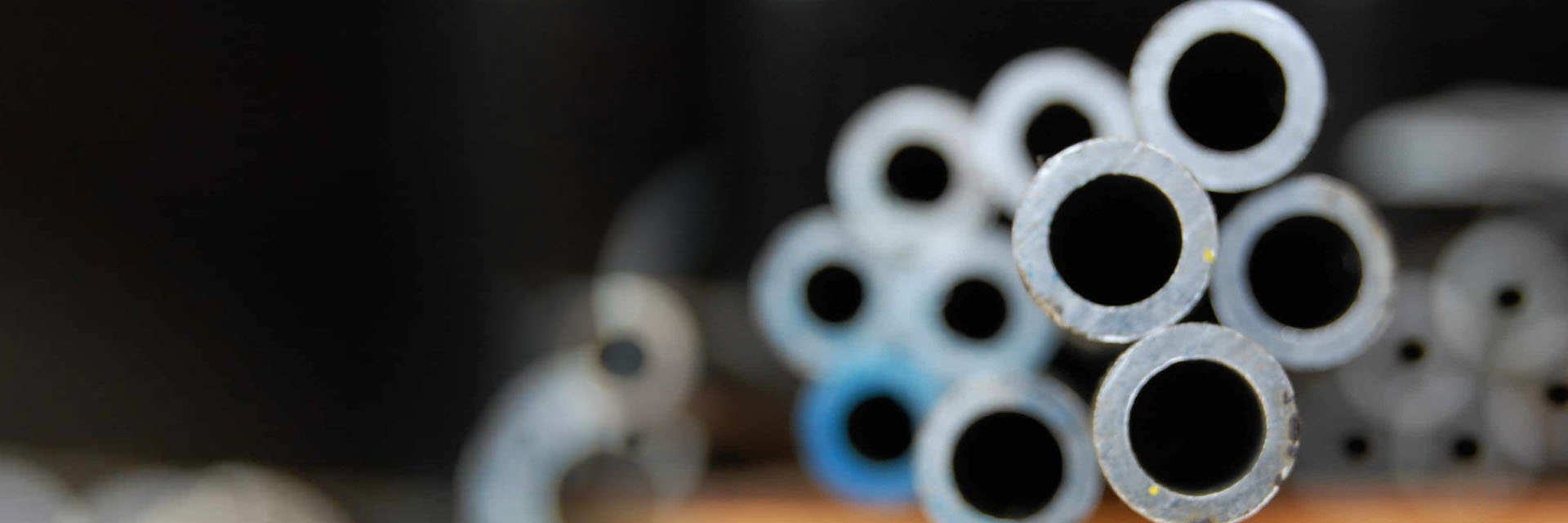
Stainless Tube Pipe
Marine systems expose piping to chlorides, humidity, vibration, stagnant water, and mixed-metal connections. For large-volume marine projects, corrosion resistance is often the main concern. A stainless tube pipe can provide long service life, but only when alloy grade, fabrication quality, surface condition, and documentation match the duty.
The growing use of alternative marine fuels also raises the standard for material traceability. The IMO 2023 GHG Strategy, adopted at MEPC 80, supports the transition toward low- and zero-GHG fuels. Fuel, cooling, exhaust treatment, seawater, and utility lines may face different temperatures and media. One stainless grade should not be assumed suitable for every line.
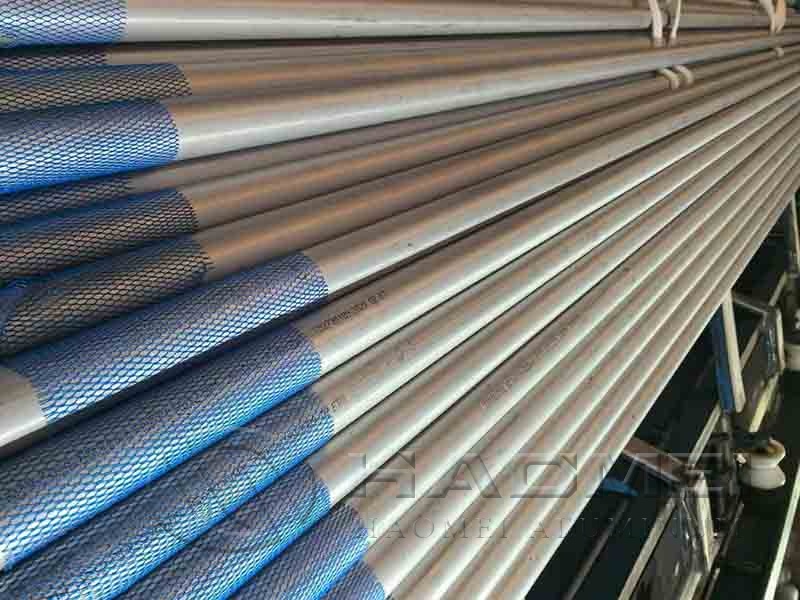
316L Corrosion Resistance in Chloride Service
Type 316L is widely specified for marine stainless piping because molybdenum improves resistance to localized corrosion compared with Type 304L. The "L" grade has a maximum carbon content of 0.030% under common ASTM chemical requirements. Lower carbon helps reduce sensitization risk near welds after thermal exposure.
However, 316L is not immune to pitting or crevice corrosion. Warm seawater, deposits, low oxygen, poor drainage, and chloride concentration under insulation can create conditions where localized attack starts. A polished external surface alone does not remove this risk.
For seawater-facing duties, specify the service details before selecting material:
| Service condition | Common material direction | Technical note |
|---|---|---|
| Dry internal accommodation piping | 304L or 316L, subject to fluid | Keep chlorinated cleaning chemicals controlled. |
| Freshwater and treated utility water | 316L is frequently used | Confirm chloride level, temperature, and stagnation periods. |
| Coastal atmosphere and splash exposure | 316L with suitable finishing | Design for drainage and prevent salt deposits. |
| Seawater or stagnant chloride media | Duplex stainless may be appropriate | Assess pressure, temperature, crevices, velocity, and cathodic protection interaction. |
| High-temperature process piping | Grade selected by temperature and fluid | Verify design code, pressure rating, and corrosion allowance. |
Duplex grades such as UNS S32205 are often considered where chloride resistance and strength need improvement over 316L. A commonly used screening calculation is PREN: %Cr + 3.3 × %Mo + 16 × %N. PREN is useful for comparison, but it is not a design approval. Weld condition, crevice geometry, water chemistry, and actual operating temperature remain decisive.
For critical seawater service, project specifications may request ASTM G48 testing. ASTM G48 covers ferric chloride methods for pitting and crevice corrosion resistance. It should be applied only with an agreed test method, temperature, specimen condition, and acceptance criterion.
Pipe, Tube, Seamless, and Welded Construction
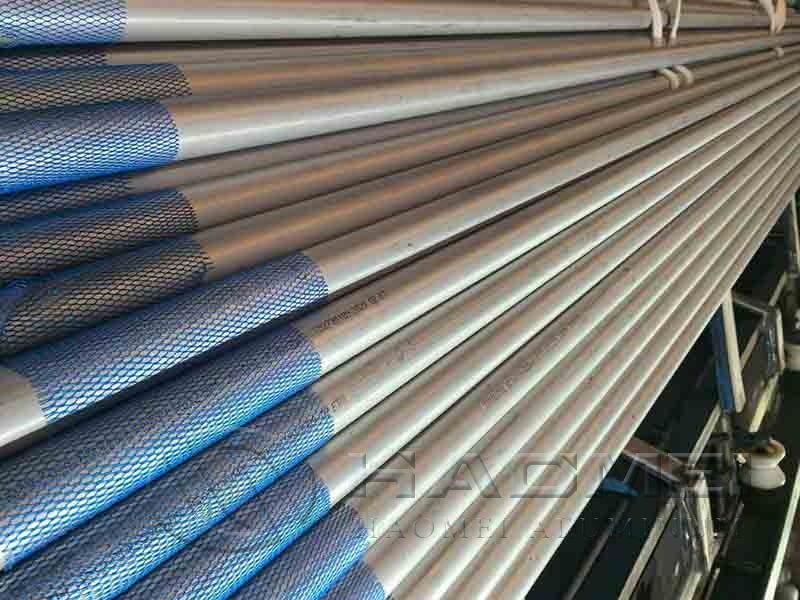
The terms pipe and tube describe different dimensional conventions. Pipe is commonly ordered by nominal pipe size and schedule. Tube is normally ordered by outside diameter and wall thickness. This difference affects fitting selection, pressure calculation, inspection planning, and installation tolerances.
ASTM A312/A312M covers seamless, straight-seam welded, and heavily cold-worked welded austenitic stainless steel pipe intended for high-temperature and general corrosive service. ASTM A269/A269M covers seamless and welded austenitic stainless tubing for general service. European projects may also refer to EN 10216-5 for seamless stainless tubes and EN 10217-7 for welded stainless tubes.
| Construction | Practical strengths | Points to control |
|---|---|---|
| Seamless stainless pipe | No longitudinal weld seam; commonly selected for demanding pressure or cyclic duties | Verify wall thickness tolerance, eccentricity, heat treatment, and NDT requirements. |
| Welded stainless pipe | Efficient production for many diameters and lengths; consistent OD control | Require qualified weld procedure, weld heat treatment where applicable, and examination scope. |
| Welded tube with cold finishing | Can offer close dimensional control and smooth surfaces | Confirm final annealing condition and surface cleanliness. |
Seamless construction does not automatically mean superior corrosion performance. A poorly cleaned seamless product can corrode earlier than a properly welded and passivated product. Welded construction does not automatically mean a weak product either. Performance depends on the specified standard, manufacturing route, weld integrity, and post-fabrication treatment.
An appropriate product reference for projects requiring ASTM compliance is ASTM A789 A312 Steel Pipe. ASTM A789/A789M addresses seamless and welded ferritic/austenitic stainless steel tubing for general corrosive service, including duplex grades.
Purchase Specification and Marine Documentation
A clear order description prevents mismatched material. State alloy designation, UNS number where needed, product standard, dimensions, length range, manufacturing method, end preparation, surface finish, and test documentation. "316L stainless" alone is not enough for a marine line item.
For traceability, request an inspection document to EN 10204 Type 3.1 when project rules require it. The document should be linked to the marked heat or lot identification and should report chemical analysis, mechanical test results, dimensions, and applicable test results. Material marking should remain readable after handling and cutting.
Use the following control points in technical evaluation:
| Control item | What to verify |
|---|---|
| Material identity | Grade, UNS designation, heat number, and matching 3.1 documentation. |
| Dimensional compliance | OD, wall thickness, length, ovality, straightness, and specified tolerance. |
| Pressure integrity | Hydrostatic, pneumatic, or eddy-current testing as required by the governing standard and project specification. |
| Weld quality | Weld procedure qualification, NDT method, repair limits, and weld appearance for welded products. |
| Surface condition | No embedded iron, heat tint, scale, oil, or chloride contamination. |
| Post-fabrication treatment | Pickling and passivation procedure aligned with ASTM A380/A380M where specified. |
| Packaging | End caps, dry protection, separation from carbon steel, and corrosion-resistant identification tags. |
Avoid direct contact between stainless piping and unprotected carbon steel during storage or fabrication. Carbon steel particles can become embedded in the stainless surface and form rust spots. Separate handling tools, racks, grinding media, and brushes help preserve the passive oxide layer.
For marine installations, also review supports, clamps, insulation interfaces, drains, dead legs, and flange gasket selection. These details influence crevice formation and chloride retention as much as the stainless grade itself.
Original source: https://www.marinesteelpipe.com/a/stainless-tube-pipe.html
Prev: Is 2507 Always Better Than 2205 Cost and Performance Comparison
Related Product
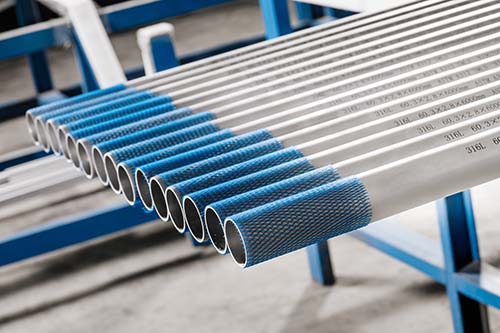
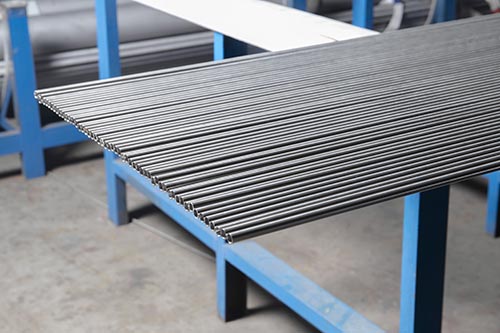
Marine systems expose piping to chlorides, humidity, vibration, stagnant water, and mixed-metal connections. For large-volume marine projects, corrosion resistance is often the main concern. A stainless tube pipe can provide long service life, but only when alloy grade, fabrication quality, surface condition, and documentation match the duty.
The growing use of alternative marine fuels also raises the standard for material traceability. The IMO 2023 GHG Strategy, adopted at MEPC 80, supports the transition toward low- and zero-GHG fuels. Fuel, cooling, exhaust treatment, seawater, and utility lines may face different temperatures and media. One stainless grade should not be assumed suitable for every line.
316L Corrosion Resistance in Chloride Service
Type 316L is widely specified for marine stainless piping because molybdenum improves resistance to localized corrosion compared with Type 304L. The "L" grade has a maximum carbon content of 0.030% under common ASTM chemical requirements. Lower carbon helps reduce sensitization risk near welds after thermal exposure.
However, 316L is not immune to pitting or crevice corrosion. Warm seawater, deposits, low oxygen, poor drainage, and chloride concentration under insulation can create conditions where localized attack starts. A polished external surface alone does not remove this risk.
For seawater-facing duties, specify the service details before selecting material:
| Service condition | Common material direction | Technical note |
|---|---|---|
| Dry internal accommodation piping | 304L or 316L, subject to fluid | Keep chlorinated cleaning chemicals controlled. |
| Freshwater and treated utility water | 316L is frequently used | Confirm chloride level, temperature, and stagnation periods. |
| Coastal atmosphere and splash exposure | 316L with suitable finishing | Design for drainage and prevent salt deposits. |
| Seawater or stagnant chloride media | Duplex stainless may be appropriate | Assess pressure, temperature, crevices, velocity, and cathodic protection interaction. |
| High-temperature process piping | Grade selected by temperature and fluid | Verify design code, pressure rating, and corrosion allowance. |
Duplex grades such as UNS S32205 are often considered where chloride resistance and strength need improvement over 316L. A commonly used screening calculation is PREN: %Cr + 3.3 × %Mo + 16 × %N. PREN is useful for comparison, but it is not a design approval. Weld condition, crevice geometry, water chemistry, and actual operating temperature remain decisive.
For critical seawater service, project specifications may request ASTM G48 testing. ASTM G48 covers ferric chloride methods for pitting and crevice corrosion resistance. It should be applied only with an agreed test method, temperature, specimen condition, and acceptance criterion.
Pipe, Tube, Seamless, and Welded Construction
The terms pipe and tube describe different dimensional conventions. Pipe is commonly ordered by nominal pipe size and schedule. Tube is normally ordered by outside diameter and wall thickness. This difference affects fitting selection, pressure calculation, inspection planning, and installation tolerances.
ASTM A312/A312M covers seamless, straight-seam welded, and heavily cold-worked welded austenitic stainless steel pipe intended for high-temperature and general corrosive service. ASTM A269/A269M covers seamless and welded austenitic stainless tubing for general service. European projects may also refer to EN 10216-5 for seamless stainless tubes and EN 10217-7 for welded stainless tubes.
| Construction | Practical strengths | Points to control |
|---|---|---|
| Seamless stainless pipe | No longitudinal weld seam; commonly selected for demanding pressure or cyclic duties | Verify wall thickness tolerance, eccentricity, heat treatment, and NDT requirements. |
| Welded stainless pipe | Efficient production for many diameters and lengths; consistent OD control | Require qualified weld procedure, weld heat treatment where applicable, and examination scope. |
| Welded tube with cold finishing | Can offer close dimensional control and smooth surfaces | Confirm final annealing condition and surface cleanliness. |
Seamless construction does not automatically mean superior corrosion performance. A poorly cleaned seamless product can corrode earlier than a properly welded and passivated product. Welded construction does not automatically mean a weak product either. Performance depends on the specified standard, manufacturing route, weld integrity, and post-fabrication treatment.
An appropriate product reference for projects requiring ASTM compliance is ASTM A789 A312 Steel Pipe. ASTM A789/A789M addresses seamless and welded ferritic/austenitic stainless steel tubing for general corrosive service, including duplex grades.
Purchase Specification and Marine Documentation
A clear order description prevents mismatched material. State alloy designation, UNS number where needed, product standard, dimensions, length range, manufacturing method, end preparation, surface finish, and test documentation. "316L stainless" alone is not enough for a marine line item.
For traceability, request an inspection document to EN 10204 Type 3.1 when project rules require it. The document should be linked to the marked heat or lot identification and should report chemical analysis, mechanical test results, dimensions, and applicable test results. Material marking should remain readable after handling and cutting.
Use the following control points in technical evaluation:
| Control item | What to verify |
|---|---|
| Material identity | Grade, UNS designation, heat number, and matching 3.1 documentation. |
| Dimensional compliance | OD, wall thickness, length, ovality, straightness, and specified tolerance. |
| Pressure integrity | Hydrostatic, pneumatic, or eddy-current testing as required by the governing standard and project specification. |
| Weld quality | Weld procedure qualification, NDT method, repair limits, and weld appearance for welded products. |
| Surface condition | No embedded iron, heat tint, scale, oil, or chloride contamination. |
| Post-fabrication treatment | Pickling and passivation procedure aligned with ASTM A380/A380M where specified. |
| Packaging | End caps, dry protection, separation from carbon steel, and corrosion-resistant identification tags. |
Avoid direct contact between stainless piping and unprotected carbon steel during storage or fabrication. Carbon steel particles can become embedded in the stainless surface and form rust spots. Separate handling tools, racks, grinding media, and brushes help preserve the passive oxide layer.
For marine installations, also review supports, clamps, insulation interfaces, drains, dead legs, and flange gasket selection. These details influence crevice formation and chloride retention as much as the stainless grade itself.