What Are Seawater Piping Applications
Multiple marine environmental factors including high-concentration chloride ions, sea salt sedimentation, alternating wet-dry tidal cycles, deep-sea high pressure and marine microbial adhesion easily cause pitting corrosion, crevice corrosion and stress cracking of ordinary steel pipes, which greatly shorten the service life of pipelines.
At present, special seawater-resistant stainless steel alloy pipes are universally adopted in marine water supply and drainage, operation maintenance and supporting engineering fields. As one of the stainless steel pipe manufacturers, we will give you a simple introduction.
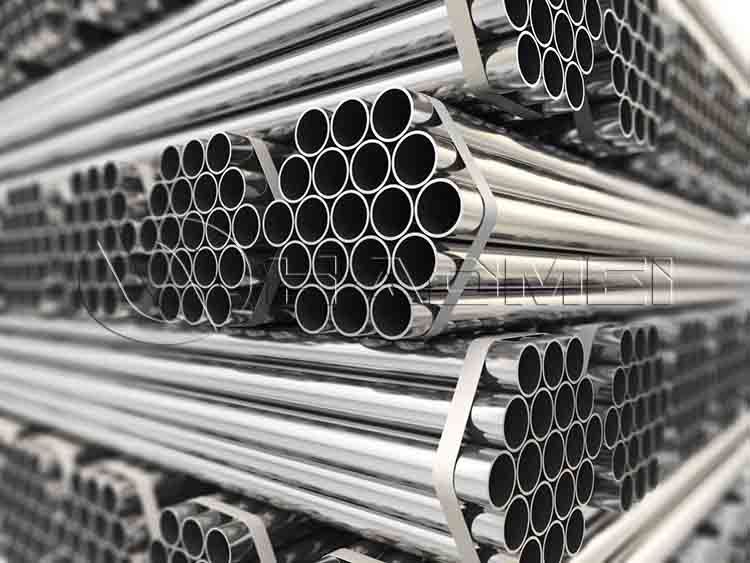
Among them, 316 and 316L austenitic stainless steels are mainstream materials for offshore applications. Combined with 2205 duplex stainless steel and 2507 super duplex stainless steel, they cover all marine working conditions ranging from mild offshore corrosion to severe deep-sea corrosion.
Free chloride ions are the core cause of seawater corrosion. These ions destroy the passive film on the stainless steel surface and trigger irreversible localized corrosion. The corrosion resistance of materials mainly depends on the ratio of three major alloy elements: chromium, nickel and molybdenum.
304 stainless steel contains no molybdenum, featuring extremely low chloride resistance. It is only applicable to fresh water and strictly prohibited from contacting seawater, so it cannot be used in coastal projects.
316L and 316 ss tubes are entry-level basic marine stainless steels. Added with 2% to 3% molybdenum and optimized nickel-chromium ratio, they can stabilize the surface passive film and resist chloride-induced penetration corrosion. They are recognized basic marine stainless steels and the most widely used alloy materials for civil coastal projects. As a low-carbon improved grade, 316L has stronger intergranular corrosion resistance, which is the preferred material for welded water pipelines.
2205 duplex stainless steel is an advanced grade with a dual microstructure of ferrite and austenite. It boasts much higher structural strength than 316L, as well as better resistance to pitting corrosion and stress corrosion, suitable for high-salinity and heated seawater conditions. As a high-end deep-sea dedicated grade, 2507 super duplex stainless steel adopts a high-chromium, high-molybdenum and high-nitrogen ratio, with far superior comprehensive corrosion resistance to the above two grades, coping with extreme corrosive environments such as deep sea, concentrated brine and high-temperature seawater.
1. Application Scenarios of 316/316L Stainless Steel Pipes
Featuring moderate cost, easy processing and welding performance, 316 series pipes adapt to conventional ambient-temperature seawater environments. They are preferred pipes for docks, coastal buildings, small and medium-sized ships and offshore water plants, covering 90% of civil offshore seawater projects. The four core application scenarios are listed as follows.
Firstly, marine supporting pipelines. 316L pipes are standard fittings for seawater cooling pipelines, bilge drainage pipes, seawater fire pipes and domestic seawater intake pipes of inland and offshore small & medium-sized cargo ships, yachts and sightseeing vessels. Ship pipelines are immersed in seawater for a long time and scoured by salt fog all year round. The low-carbon property of 316L avoids corrosion cracking at welded joints and extends service life greatly compared with hot-dip galvanized carbon steel pipes. Nevertheless, it is not recommended for large ocean-going deep-sea ships.
Secondly, coastal municipal, cultural and tourism projects. 316 stainless steel pipes are mostly applied to coastal landscape water circulation systems, coastal fountain seawater circulation pipelines, central air-conditioning seawater cooling pipes of coastal buildings, and water supply & drainage branch pipes of coastal docks. Affected by alternating wet-dry tides, such sites accumulate a large amount of salt fog. Relying on the salt corrosion resistance of molybdenum alloy, 316 pipes can serve stably for more than 10 years with reasonable cost and high durability, delivering better cost performance than duplex stainless steel in civil scenarios.
Thirdly, pretreatment pipelines for small and medium-sized seawater desalination projects. 316L stainless steel pipes are commonly used for raw seawater intake and transmission pipelines at the water inlet of island civil water supply stations and coastal factory facilities. Chloride ions in flowing raw seawater have low activity, hardly causing sedimentary crevice corrosion, so 316 materials fully meet water intake and conveying demands. However, duplex stainless steel must be adopted for concentrated brine pipelines after desalination due to doubled chloride concentration.
Fourthly, offshore aquaculture water circulation systems. 316 pipes are widely used in onshore water circulation pipelines and seawater aeration pipelines for factory coastal fish and shrimp farming and deep-sea cage culture. The material releases no toxic heavy metals and will not pollute aquaculture water. Besides, it resists adhesion corrosion caused by marine microorganisms and algae, adapting to perennial constant-temperature seawater circulation, and serves as the standard pipeline material for offshore aquaculture industry.
2. Application Scenarios of 2205/2507 Duplex Stainless Steel Pipes
316 stainless steel pipes will suffer rapid corrosion and cracking under working conditions including high seawater temperature, slow water flow prone to sludge deposition, numerous gaps in closed pipelines, deep-sea high pressure and concentrated brine, so duplex stainless steel is required as an upgrade, with clear application boundaries between the two grades.
2205 duplex stainless steel is a high-quality alternative to 316. It is suitable for auxiliary cooling pipelines of offshore platforms, seawater heat exchange pipes of coastal power plants, main water delivery pipes of medium-sized seawater desalination plants, and water transmission pipelines of tidal power stations. With enhanced resistance to chloride stress cracking, it allows thinner pipe wall design to reduce material consumption. It fits medium-temperature and medium-corrosion offshore industrial conditions, priced between 316 and 2507, with prominent cost performance for industrial offshore projects.
2507 super duplex stainless steel is a top-grade material for extreme deep-sea working conditions, replacing 316 completely for harsh marine environments. It is mainly used for deep-sea oil and gas transmission pipelines, fire-fighting main seawater pipes of offshore drilling platforms, high-pressure concentrated brine discharge pipes, special seawater cooling pipes for nuclear power plants, and buried subsea water transmission pipelines. Capable of resisting combined corrosion from high temperature, high pressure, high chloride ions and microorganisms, it has a service life of over 20 years, and is the only qualified pipe material for closed high-corrosion deep-sea environments.
Original source: https://www.marinesteelpipe.com/a/what-are-seawater-piping-applications.html
Prev: SCH 40 vs SCH 10 pipe wall thickness
Next: SS Seamless Tube Size Chart
Related Product
Multiple marine environmental factors including high-concentration chloride ions, sea salt sedimentation, alternating wet-dry tidal cycles, deep-sea high pressure and marine microbial adhesion easily cause pitting corrosion, crevice corrosion and stress cracking of ordinary steel pipes, which greatly shorten the service life of pipelines.
At present, special seawater-resistant stainless steel alloy pipes are universally adopted in marine water supply and drainage, operation maintenance and supporting engineering fields. As one of the stainless steel pipe manufacturers, we will give you a simple introduction.
Among them, 316 and 316L austenitic stainless steels are mainstream materials for offshore applications. Combined with 2205 duplex stainless steel and 2507 super duplex stainless steel, they cover all marine working conditions ranging from mild offshore corrosion to severe deep-sea corrosion.
Free chloride ions are the core cause of seawater corrosion. These ions destroy the passive film on the stainless steel surface and trigger irreversible localized corrosion. The corrosion resistance of materials mainly depends on the ratio of three major alloy elements: chromium, nickel and molybdenum.
304 stainless steel contains no molybdenum, featuring extremely low chloride resistance. It is only applicable to fresh water and strictly prohibited from contacting seawater, so it cannot be used in coastal projects.
316L and 316 ss tubes are entry-level basic marine stainless steels. Added with 2% to 3% molybdenum and optimized nickel-chromium ratio, they can stabilize the surface passive film and resist chloride-induced penetration corrosion. They are recognized basic marine stainless steels and the most widely used alloy materials for civil coastal projects. As a low-carbon improved grade, 316L has stronger intergranular corrosion resistance, which is the preferred material for welded water pipelines.
2205 duplex stainless steel is an advanced grade with a dual microstructure of ferrite and austenite. It boasts much higher structural strength than 316L, as well as better resistance to pitting corrosion and stress corrosion, suitable for high-salinity and heated seawater conditions. As a high-end deep-sea dedicated grade, 2507 super duplex stainless steel adopts a high-chromium, high-molybdenum and high-nitrogen ratio, with far superior comprehensive corrosion resistance to the above two grades, coping with extreme corrosive environments such as deep sea, concentrated brine and high-temperature seawater.
1. Application Scenarios of 316/316L Stainless Steel Pipes
Featuring moderate cost, easy processing and welding performance, 316 series pipes adapt to conventional ambient-temperature seawater environments. They are preferred pipes for docks, coastal buildings, small and medium-sized ships and offshore water plants, covering 90% of civil offshore seawater projects. The four core application scenarios are listed as follows.
Firstly, marine supporting pipelines. 316L pipes are standard fittings for seawater cooling pipelines, bilge drainage pipes, seawater fire pipes and domestic seawater intake pipes of inland and offshore small & medium-sized cargo ships, yachts and sightseeing vessels. Ship pipelines are immersed in seawater for a long time and scoured by salt fog all year round. The low-carbon property of 316L avoids corrosion cracking at welded joints and extends service life greatly compared with hot-dip galvanized carbon steel pipes. Nevertheless, it is not recommended for large ocean-going deep-sea ships.
Secondly, coastal municipal, cultural and tourism projects. 316 stainless steel pipes are mostly applied to coastal landscape water circulation systems, coastal fountain seawater circulation pipelines, central air-conditioning seawater cooling pipes of coastal buildings, and water supply & drainage branch pipes of coastal docks. Affected by alternating wet-dry tides, such sites accumulate a large amount of salt fog. Relying on the salt corrosion resistance of molybdenum alloy, 316 pipes can serve stably for more than 10 years with reasonable cost and high durability, delivering better cost performance than duplex stainless steel in civil scenarios.
Thirdly, pretreatment pipelines for small and medium-sized seawater desalination projects. 316L stainless steel pipes are commonly used for raw seawater intake and transmission pipelines at the water inlet of island civil water supply stations and coastal factory facilities. Chloride ions in flowing raw seawater have low activity, hardly causing sedimentary crevice corrosion, so 316 materials fully meet water intake and conveying demands. However, duplex stainless steel must be adopted for concentrated brine pipelines after desalination due to doubled chloride concentration.
Fourthly, offshore aquaculture water circulation systems. 316 pipes are widely used in onshore water circulation pipelines and seawater aeration pipelines for factory coastal fish and shrimp farming and deep-sea cage culture. The material releases no toxic heavy metals and will not pollute aquaculture water. Besides, it resists adhesion corrosion caused by marine microorganisms and algae, adapting to perennial constant-temperature seawater circulation, and serves as the standard pipeline material for offshore aquaculture industry.
2. Application Scenarios of 2205/2507 Duplex Stainless Steel Pipes
316 stainless steel pipes will suffer rapid corrosion and cracking under working conditions including high seawater temperature, slow water flow prone to sludge deposition, numerous gaps in closed pipelines, deep-sea high pressure and concentrated brine, so duplex stainless steel is required as an upgrade, with clear application boundaries between the two grades.
2205 duplex stainless steel is a high-quality alternative to 316. It is suitable for auxiliary cooling pipelines of offshore platforms, seawater heat exchange pipes of coastal power plants, main water delivery pipes of medium-sized seawater desalination plants, and water transmission pipelines of tidal power stations. With enhanced resistance to chloride stress cracking, it allows thinner pipe wall design to reduce material consumption. It fits medium-temperature and medium-corrosion offshore industrial conditions, priced between 316 and 2507, with prominent cost performance for industrial offshore projects.
2507 super duplex stainless steel is a top-grade material for extreme deep-sea working conditions, replacing 316 completely for harsh marine environments. It is mainly used for deep-sea oil and gas transmission pipelines, fire-fighting main seawater pipes of offshore drilling platforms, high-pressure concentrated brine discharge pipes, special seawater cooling pipes for nuclear power plants, and buried subsea water transmission pipelines. Capable of resisting combined corrosion from high temperature, high pressure, high chloride ions and microorganisms, it has a service life of over 20 years, and is the only qualified pipe material for closed high-corrosion deep-sea environments.