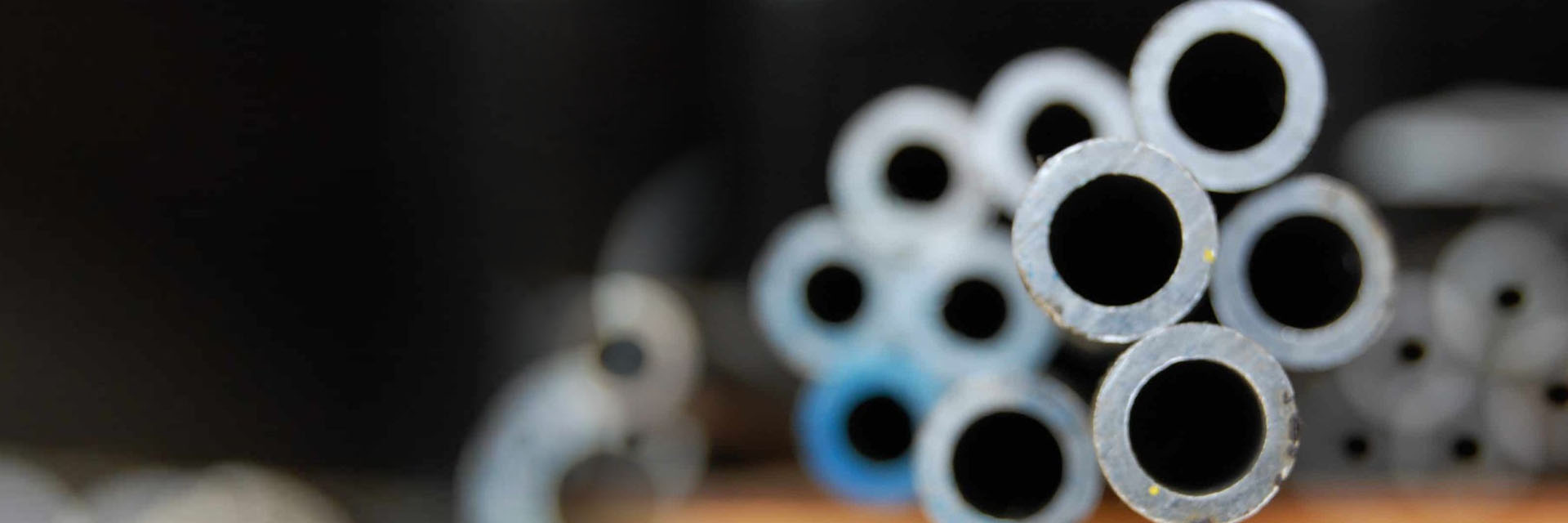
What Are Marine Seamless Steel Pipe Types
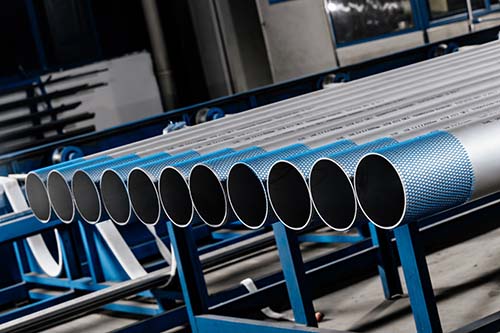
Seamless steel pipes for marine applications fall into four core categories—carbon steel, carbon-manganese steel, alloy steel, and stainless steel—covering the piping requirements for all ship operating conditions. Among these, stainless steel piping is the primary choice for corrosion-resistant applications and currently serves as the mainstream material for high-end marine piping systems.
Austenitic and duplex stainless steel seamless pipes, thanks to their excellent overall performance, have become the primary materials used in high-end and ocean-going vessels.
1. Austenitic Stainless Steel Seamless Marine Pipes
Austenitic stainless steel pipe is the most widely used stainless steel material for marine piping. Characterized by a single-phase austenitic microstructure, it offers excellent low-temperature toughness, weldability, and resistance to uniform corrosion. With mature manufacturing technology, high cost-effectiveness, and broad adaptability, it is suitable for the vast majority of marine applications involving medium-to-low pressure, ambient temperatures, and standard corrosive environments, making it the preferred stainless steel piping material for civil, small, and medium-sized vessels.
After solution heat treatment, this material exhibits exceptional plasticity and toughness, resists cracking, and offers excellent welding characteristics. It meets the requirements for bending and butt-welding in complex marine piping layouts and maintains stable mechanical properties at low temperatures, making it suitable for ocean-going vessels operating across regions with significant temperature variations. Mainstream marine grades include:
- 06Cr19Ni10 (304/S30408): A classic, general-purpose grade with a balanced chromium-nickel ratio. It offers good resistance to corrosion from the atmosphere, fresh water, and mild acids or alkalis. Moderately priced, it is widely used for fresh water transport, ventilation ducts, and general auxiliary hydraulic lines, serving as a standard grade for marine stainless steel piping.
- 022Cr19Ni10 (304L/S30403): An ultra-low carbon version of 304 stainless steel. It significantly reduces the risk of intergranular corrosion during welding and eliminates the need for post-weld solution treatment, making it ideal for on-site marine welding operations. It is frequently used in seawater pre-treatment piping systems that require extensive welding and high stability regarding corrosion resistance.
- 06Cr17Ni12Mo2 (316/S31608): Contains added molybdenum, which significantly enhances resistance to chloride corrosion. Compared to the 304 series, it offers superior resistance to seawater pitting and crevice corrosion, making it suitable for standard marine seawater cooling systems and sewage treatment piping.
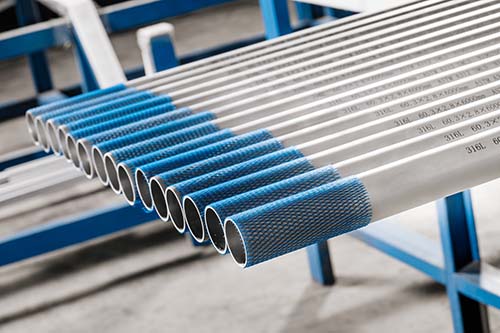
- 022Cr17Ni12Mo2 (316L/S31603): A mainstream, high-end austenitic grade for marine applications. It combines ultra-low carbon content with molybdenum, offering comprehensively upgraded corrosion resistance, weldability, and stability. It is a core material for seawater piping and deck wash-down lines on ocean-going vessels and boasts the widest range of applications.
- 06Cr18Ni11Ti (321/S32108): Contains added titanium, which effectively inhibits high-temperature intergranular corrosion. It offers excellent high-temperature performance, making it suitable for medium-to-high-temperature operating conditions such as marine propulsion systems and high-temperature heat exchange piping.
- 904L: A high-nickel, high-molybdenum austenitic stainless steel with outstanding resistance to severe corrosion. It is suitable for high-salinity and highly polluted seawater environments and is frequently used for piping systems exposed to harsh corrosive conditions on specialized vessels and offshore engineering ships.
2. Duplex Stainless Steel Seamless Marine Piping
Duplex stainless steel is a specialized material for high-end marine piping systems. Its microstructure consists of a dual-phase matrix of austenite and ferrite, perfectly combining the toughness and weldability of austenitic stainless steel with the high strength and stress corrosion resistance of ferritic stainless steel.
Compared to austenitic stainless steel, duplex steel offers a yield strength approximately twice that of 316L and significantly improved resistance to chloride stress corrosion, pitting, and crevice corrosion, making it suitable for demanding marine environments characterized by high salinity, high pressure, and high temperatures.
It is primarily used for critical, corrosion-resistant, high-pressure piping systems on large ocean-going vessels, LNG carriers, scientific research vessels, and offshore engineering ships. Mainstream marine-grade steels fall into two categories: standard duplex stainless steels and super duplex stainless steels:
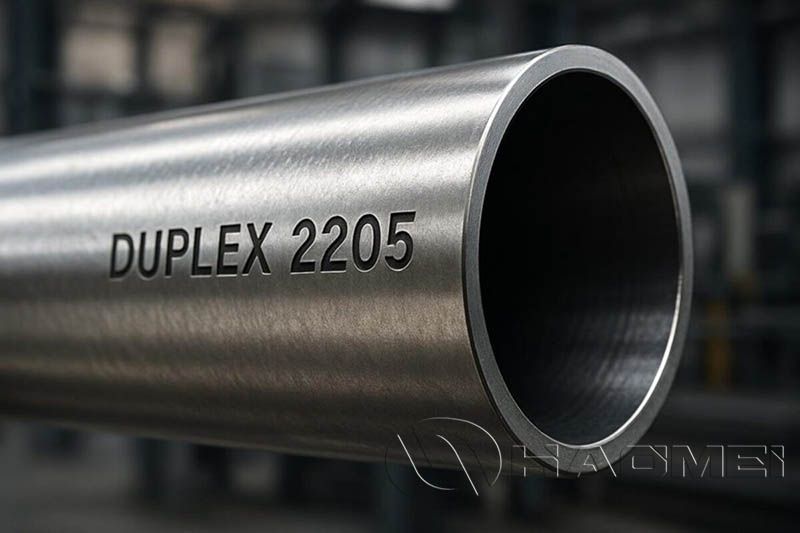
- Duplex 2205 pipe (2205/022Cr23Ni5Mo3N): The most commonly used standard duplex stainless steel. Featuring a 22Cr-5Ni-3Mo-N composition and a PREN ≥ 35, it offers excellent resistance to chloride corrosion, high strength, and good toughness. With a balanced cost-performance ratio, it is widely used in high-pressure seawater cooling lines, ballast water systems, and oil-water separation piping on ships, serving as the primary grade for marine duplex steel applications.
- S31803: An economical duplex stainless steel. Its composition is similar to that of 2205, though its performance metrics are slightly lower. It is suitable for piping systems subject to moderate corrosion and medium-to-high pressure, often used in auxiliary marine seawater lines where a balance between performance and cost is required.
- S32750 (2507/022Cr25Ni7Mo4N): The benchmark grade for super duplex stainless steel. With higher chromium, molybdenum, and nitrogen content, it achieves a PREN exceeding 40 and a critical pitting temperature of up to 85°C. It offers superior corrosion resistance and ultra-high strength, making it suitable for extreme marine conditions involving ultra-high pressure, high salinity, and high temperatures; it is frequently used for critical pressure-bearing, corrosion-resistant piping on LNG carriers and deep-sea research vessels.
- S32760: A high-end super duplex steel featuring an optimized alloy composition. It offers enhanced resistance to crevice corrosion and erosion-corrosion, making it suitable for extremely demanding applications such as deep-sea marine piping and high-pressure seawater desalination lines.
Original source: https://www.marinesteelpipe.com/a/what-are-marine-seamless-steel-pipe-types.html
Prev: What Are the Choices Of Stainless Steel Ship Piping
Next: How Will The Strength Of Stainless Steel Pipe Affect Its Corrosion Resistance
Related Product
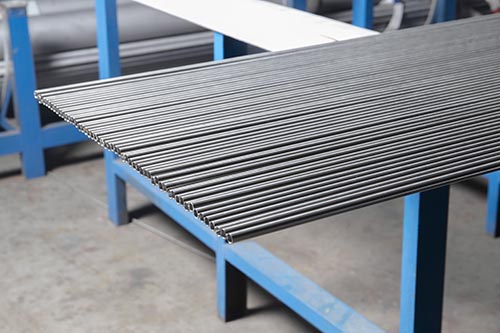
Seamless steel pipes for marine applications fall into four core categories—carbon steel, carbon-manganese steel, alloy steel, and stainless steel—covering the piping requirements for all ship operating conditions. Among these, stainless steel piping is the primary choice for corrosion-resistant applications and currently serves as the mainstream material for high-end marine piping systems.
Austenitic and duplex stainless steel seamless pipes, thanks to their excellent overall performance, have become the primary materials used in high-end and ocean-going vessels.
1. Austenitic Stainless Steel Seamless Marine Pipes
Austenitic stainless steel pipe is the most widely used stainless steel material for marine piping. Characterized by a single-phase austenitic microstructure, it offers excellent low-temperature toughness, weldability, and resistance to uniform corrosion. With mature manufacturing technology, high cost-effectiveness, and broad adaptability, it is suitable for the vast majority of marine applications involving medium-to-low pressure, ambient temperatures, and standard corrosive environments, making it the preferred stainless steel piping material for civil, small, and medium-sized vessels.
After solution heat treatment, this material exhibits exceptional plasticity and toughness, resists cracking, and offers excellent welding characteristics. It meets the requirements for bending and butt-welding in complex marine piping layouts and maintains stable mechanical properties at low temperatures, making it suitable for ocean-going vessels operating across regions with significant temperature variations. Mainstream marine grades include:
- 06Cr19Ni10 (304/S30408): A classic, general-purpose grade with a balanced chromium-nickel ratio. It offers good resistance to corrosion from the atmosphere, fresh water, and mild acids or alkalis. Moderately priced, it is widely used for fresh water transport, ventilation ducts, and general auxiliary hydraulic lines, serving as a standard grade for marine stainless steel piping.
- 022Cr19Ni10 (304L/S30403): An ultra-low carbon version of 304 stainless steel. It significantly reduces the risk of intergranular corrosion during welding and eliminates the need for post-weld solution treatment, making it ideal for on-site marine welding operations. It is frequently used in seawater pre-treatment piping systems that require extensive welding and high stability regarding corrosion resistance.
- 06Cr17Ni12Mo2 (316/S31608): Contains added molybdenum, which significantly enhances resistance to chloride corrosion. Compared to the 304 series, it offers superior resistance to seawater pitting and crevice corrosion, making it suitable for standard marine seawater cooling systems and sewage treatment piping.
- 022Cr17Ni12Mo2 (316L/S31603): A mainstream, high-end austenitic grade for marine applications. It combines ultra-low carbon content with molybdenum, offering comprehensively upgraded corrosion resistance, weldability, and stability. It is a core material for seawater piping and deck wash-down lines on ocean-going vessels and boasts the widest range of applications.
- 06Cr18Ni11Ti (321/S32108): Contains added titanium, which effectively inhibits high-temperature intergranular corrosion. It offers excellent high-temperature performance, making it suitable for medium-to-high-temperature operating conditions such as marine propulsion systems and high-temperature heat exchange piping.
- 904L: A high-nickel, high-molybdenum austenitic stainless steel with outstanding resistance to severe corrosion. It is suitable for high-salinity and highly polluted seawater environments and is frequently used for piping systems exposed to harsh corrosive conditions on specialized vessels and offshore engineering ships.
2. Duplex Stainless Steel Seamless Marine Piping
Duplex stainless steel is a specialized material for high-end marine piping systems. Its microstructure consists of a dual-phase matrix of austenite and ferrite, perfectly combining the toughness and weldability of austenitic stainless steel with the high strength and stress corrosion resistance of ferritic stainless steel.
Compared to austenitic stainless steel, duplex steel offers a yield strength approximately twice that of 316L and significantly improved resistance to chloride stress corrosion, pitting, and crevice corrosion, making it suitable for demanding marine environments characterized by high salinity, high pressure, and high temperatures.
It is primarily used for critical, corrosion-resistant, high-pressure piping systems on large ocean-going vessels, LNG carriers, scientific research vessels, and offshore engineering ships. Mainstream marine-grade steels fall into two categories: standard duplex stainless steels and super duplex stainless steels:
- Duplex 2205 pipe (2205/022Cr23Ni5Mo3N): The most commonly used standard duplex stainless steel. Featuring a 22Cr-5Ni-3Mo-N composition and a PREN ≥ 35, it offers excellent resistance to chloride corrosion, high strength, and good toughness. With a balanced cost-performance ratio, it is widely used in high-pressure seawater cooling lines, ballast water systems, and oil-water separation piping on ships, serving as the primary grade for marine duplex steel applications.
- S31803: An economical duplex stainless steel. Its composition is similar to that of 2205, though its performance metrics are slightly lower. It is suitable for piping systems subject to moderate corrosion and medium-to-high pressure, often used in auxiliary marine seawater lines where a balance between performance and cost is required.
- S32750 (2507/022Cr25Ni7Mo4N): The benchmark grade for super duplex stainless steel. With higher chromium, molybdenum, and nitrogen content, it achieves a PREN exceeding 40 and a critical pitting temperature of up to 85°C. It offers superior corrosion resistance and ultra-high strength, making it suitable for extreme marine conditions involving ultra-high pressure, high salinity, and high temperatures; it is frequently used for critical pressure-bearing, corrosion-resistant piping on LNG carriers and deep-sea research vessels.
- S32760: A high-end super duplex steel featuring an optimized alloy composition. It offers enhanced resistance to crevice corrosion and erosion-corrosion, making it suitable for extremely demanding applications such as deep-sea marine piping and high-pressure seawater desalination lines.