How Will The Strength Of Stainless Steel Pipe Affect Its Corrosion Resistance
In stainless steel pipe applications, mechanical strength and corrosion resistance are two core, interdependent properties. Many users mistakenly regard them as independent features, believing higher strength equals better overall performance. In fact, strength changes caused by material quality and processing directly affect anti-corrosion capability.
Basic Overview of EN 1.4301 (304) Stainless Steel Pipe
EN 1.4301 stainless steel is the European standard grade for classic 304 stainless steel, favored globally for its balanced mechanical performance and reliable corrosion resistance. With 17.5–19.5% chromium and 8–10.5% nickel alloy composition, it forms a self-repairing passive film on the surface, delivering stable protection against daily corrosive media. Under annealed conditions, standard 1.4301 pipes offer 500–700 MPa tensile strength and 190 MPa minimum yield strength, sufficient for most conventional pipeline loads. Compared with low-carbon 1.4307 (304L), it features higher structural strength while retaining excellent resistance to atmospheric, fresh water and mild chemical corrosion.
The Intrinsic Link Between Stainless Steel Pipe Strength and Corrosion Resistance
Pipe strength is not merely a mechanical index; it reflects internal grain structure, residual stress and metallurgical stability—key factors that dominate corrosion resistance. For EN 1.4301/304 stainless pipes, the connection between strength and anti-corrosion performance is mainly reflected in three core aspects.
1. Base Material Strength: Balanced Stability Ensures Basic Anti-Corrosion Performance
Qualified annealed EN 1.4301 pipes have moderate, stable strength derived from uniform austenitic grain distribution. This flawless internal structure avoids metallurgical defects, enabling the surface passive film to work stably and deliver consistent corrosion resistance in conventional environments like building water supply and general industrial piping. In contrast, unqualified low-strength 304 pipes with loose internal structures and micro defects form corrosion initiation points, causing premature pitting and rusting even with standard alloy composition.
2. Excessive Cold Work Strengthening Sacrifices Local Corrosion Resistance
Cold working processes like cold rolling and bending can significantly improve the strength and hardness of EN 1.4301 pipes, but this enhancement sacrifices local corrosion resistance. Excessive cold working increases internal stress and grain dislocation density, disrupting uniform microstructure and breaking the integrity of the protective passive film.
Uneven stress distribution creates electrochemical potential differences on pipe surfaces, inducing stress corrosion cracking (SCC) in chloride-rich, high-temperature environments. Cold-worked high-strength 304 pipes are far more prone to pitting and crack corrosion at bends and joints than standard annealed pipes, greatly shortening service life in harsh conditions.
3. Strength Uniformity Determines Long-Term Corrosion Stability
Uniform strength distribution guarantees long-term stable corrosion resistance. Qualified EN 1.4301 seamless pipes feature consistent wall thickness and structural strength, supporting even passive film growth and overall anti-corrosion stability. However, welded 304 pipes have uneven strength in welding heat-affected zones. Local strength decline and grain boundary carbide precipitation cause intergranular corrosion, forming localized corrosion weak points even if overall strength meets standards.
4. Strength-Corrosion Tradeoff: Practical Application Rules for EN 1.4301 Pipes
Clarifying the strength-corrosion tradeoff guides scientific pipe selection. For conventional indoor water supply and general fluid transmission, standard annealed EN 1.4301 pipes are ideal. Their matched strength and stable microstructure balance load resistance and corrosion performance with cost efficiency.
For high-pressure scenarios requiring higher strength, cold-worked high-strength 304 stainless pipes are applicable but require targeted anti-corrosion protection. They should be avoided in high-temperature and chloride-rich environments to prevent stress corrosion. Stress relief annealing after processing can effectively reduce internal stress and recover corrosion resistance.
In harsh coastal and chemical workshop environments, corrosion resistance takes priority over high strength. Standard softened 1.4301 pipes or low-carbon 304L pipes perform more stably, avoiding corrosion failure caused by strength and structural defects.
Conclusion
In summary, strength acts as a double-edged sword for the corrosion resistance of EN 1.4301/304 stainless steel pipes. Standard inherent strength corresponds to optimal anti-corrosion performance, while excessive strengthening via cold working damages structural stability and weakens corrosion resistance. For pipeline service life, strength uniformity and microstructure stability matter more than absolute strength values.
In practical engineering, strength parameters of 304 stainless pipes should be matched with service environments. Balancing mechanical strength and corrosion resistance maximizes the comprehensive performance of EN 1.4301 pipes and ensures long-term, stable pipeline operation.
Original source: https://www.marinesteelpipe.com/a/how-will-the-strength-of-stainless-steel-pipe-affect-its-corrosion-resistance.html
Prev: What Are Marine Seamless Steel Pipe Types
Next: Super Duplex 2507 vs. Duplex 2205 Pipe
Related Product
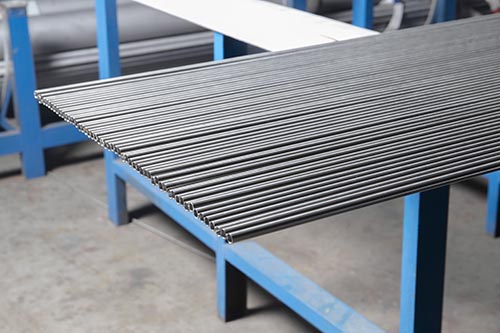
In stainless steel pipe applications, mechanical strength and corrosion resistance are two core, interdependent properties. Many users mistakenly regard them as independent features, believing higher strength equals better overall performance. In fact, strength changes caused by material quality and processing directly affect anti-corrosion capability.
Basic Overview of EN 1.4301 (304) Stainless Steel Pipe
EN 1.4301 stainless steel is the European standard grade for classic 304 stainless steel, favored globally for its balanced mechanical performance and reliable corrosion resistance. With 17.5–19.5% chromium and 8–10.5% nickel alloy composition, it forms a self-repairing passive film on the surface, delivering stable protection against daily corrosive media. Under annealed conditions, standard 1.4301 pipes offer 500–700 MPa tensile strength and 190 MPa minimum yield strength, sufficient for most conventional pipeline loads. Compared with low-carbon 1.4307 (304L), it features higher structural strength while retaining excellent resistance to atmospheric, fresh water and mild chemical corrosion.
The Intrinsic Link Between Stainless Steel Pipe Strength and Corrosion Resistance
Pipe strength is not merely a mechanical index; it reflects internal grain structure, residual stress and metallurgical stability—key factors that dominate corrosion resistance. For EN 1.4301/304 stainless pipes, the connection between strength and anti-corrosion performance is mainly reflected in three core aspects.
1. Base Material Strength: Balanced Stability Ensures Basic Anti-Corrosion Performance
Qualified annealed EN 1.4301 pipes have moderate, stable strength derived from uniform austenitic grain distribution. This flawless internal structure avoids metallurgical defects, enabling the surface passive film to work stably and deliver consistent corrosion resistance in conventional environments like building water supply and general industrial piping. In contrast, unqualified low-strength 304 pipes with loose internal structures and micro defects form corrosion initiation points, causing premature pitting and rusting even with standard alloy composition.
2. Excessive Cold Work Strengthening Sacrifices Local Corrosion Resistance
Cold working processes like cold rolling and bending can significantly improve the strength and hardness of EN 1.4301 pipes, but this enhancement sacrifices local corrosion resistance. Excessive cold working increases internal stress and grain dislocation density, disrupting uniform microstructure and breaking the integrity of the protective passive film.
Uneven stress distribution creates electrochemical potential differences on pipe surfaces, inducing stress corrosion cracking (SCC) in chloride-rich, high-temperature environments. Cold-worked high-strength 304 pipes are far more prone to pitting and crack corrosion at bends and joints than standard annealed pipes, greatly shortening service life in harsh conditions.
3. Strength Uniformity Determines Long-Term Corrosion Stability
Uniform strength distribution guarantees long-term stable corrosion resistance. Qualified EN 1.4301 seamless pipes feature consistent wall thickness and structural strength, supporting even passive film growth and overall anti-corrosion stability. However, welded 304 pipes have uneven strength in welding heat-affected zones. Local strength decline and grain boundary carbide precipitation cause intergranular corrosion, forming localized corrosion weak points even if overall strength meets standards.
4. Strength-Corrosion Tradeoff: Practical Application Rules for EN 1.4301 Pipes
Clarifying the strength-corrosion tradeoff guides scientific pipe selection. For conventional indoor water supply and general fluid transmission, standard annealed EN 1.4301 pipes are ideal. Their matched strength and stable microstructure balance load resistance and corrosion performance with cost efficiency.
For high-pressure scenarios requiring higher strength, cold-worked high-strength 304 stainless pipes are applicable but require targeted anti-corrosion protection. They should be avoided in high-temperature and chloride-rich environments to prevent stress corrosion. Stress relief annealing after processing can effectively reduce internal stress and recover corrosion resistance.
In harsh coastal and chemical workshop environments, corrosion resistance takes priority over high strength. Standard softened 1.4301 pipes or low-carbon 304L pipes perform more stably, avoiding corrosion failure caused by strength and structural defects.
Conclusion
In summary, strength acts as a double-edged sword for the corrosion resistance of EN 1.4301/304 stainless steel pipes. Standard inherent strength corresponds to optimal anti-corrosion performance, while excessive strengthening via cold working damages structural stability and weakens corrosion resistance. For pipeline service life, strength uniformity and microstructure stability matter more than absolute strength values.
In practical engineering, strength parameters of 304 stainless pipes should be matched with service environments. Balancing mechanical strength and corrosion resistance maximizes the comprehensive performance of EN 1.4301 pipes and ensures long-term, stable pipeline operation.