What Strength Is Required for Marine Stainless Steel Pipes
Unlike ordinary civilian stainless steel pipes, the strength, corrosion resistance, and structural stability of marine stainless steel pipes directly determine the safety of ship navigation and the service life of the pipeline. Many ship maintenance and procurement personnel are often confused: what strength standards do marine stainless steel pipes need to meet? Should 316L or 310S be selected for different operating conditions?
I. Core Strength Judgment Standards for Marine Stainless Steel Pipes
The strength of marine stainless steel pipes is not a single numerical value. The industry mainly uses four core indicators as the judgment criteria: tensile strength, yield strength, high-temperature strength, and compressive strength.
Simultaneously, it must comply with GB/T 5312 standard for marine steel pipes and ASTM A312 general specification for stainless steel pipes, adapting to different scenarios such as nearshore, ocean-going, engine room high-temperature, and seawater transportation.
The basic strength threshold for conventional room-temperature marine pipelines is: tensile strength ≥ 485MPa, yield strength ≥ 170MPa, elongation ≥ 40%, meeting the requirements of conventional water pressure impact and structural vibration loads on ships.
For special operating conditions such as high temperature and high pressure steam in the engine room, and exhaust gas emissions, higher requirements are placed on the high-temperature tensile strength and creep resistance of the pipes. Ordinary stainless steel pipes are not suitable, and special high-temperature resistant stainless steel materials must be selected.
In addition, the strength of marine pipes must be linked to their corrosion resistance. Seawater chloride ion corrosion and marine atmospheric salt spray corrosion will continuously reduce the pipe wall thickness and damage the metal structure. Long-term use will lead to a significant decrease in the effective strength of the pipes. Therefore, the selection of marine pipes must consider both initial mechanical strength and strength stability after corrosion.
II. Strength Comparison of Mainstream Marine Stainless Steel Materials: 316L vs 310S
Ordinary 304 stainless steel pipes are rarely used in the marine industry. Currently, the mainstream suitable materials are 316L low-carbon stainless steel and 310S high-temperature resistant stainless steel. The strength characteristics and suitable operating conditions of these two materials differ greatly, which is the core key to the selection of marine piping.
1. 316L Stainless Steel Pipe
TP310s is the preferred material for marine seawater pipelines, water supply and drainage pipelines, and hydraulic auxiliary pipelines. Belonging to the low-carbon molybdenum austenitic stainless steel family, its core advantage lies in its balance of high strength at room temperature and excellent resistance to chloride ion corrosion, making it perfectly suited for the corrosive marine environment.
In terms of strength parameters, 316L has a tensile strength ≥485MPa and a yield strength ≥170MPa at room temperature, fully meeting the pressure and vibration resistance requirements of most marine pipelines at room temperature. Its low-carbon composition effectively avoids carbide precipitation during welding, eliminating intergranular corrosion problems. The strength stability after welding is almost unaffected, making it suitable for on-site welding and installation on ships.
Regarding operating conditions, 316L can operate stably within the normal marine temperature range of -20℃ to 80℃ and can withstand short-term temperature shocks up to 871℃. It is suitable for medium- and low-temperature, high-corrosion conditions such as seawater transportation, tank water supply and drainage, and cryogenic fuel transportation on ocean-going vessels. It is a general-purpose pipe material for civilian ships, cargo ships, and offshore vessels.
2. 310S Stainless Steel Pipe
310S pipe is a high-chromium, nickel-containing, high-temperature resistant austenitic stainless steel with a chromium content of 24-26% and a nickel content of 19-22%. It is a specialized material for high-temperature pipelines in ships, with core advantages including stable high-temperature strength, resistance to thermal creep, and resistance to high-temperature oxidation, compensating for the insufficient high-temperature strength of 316L.
In terms of strength, the room-temperature mechanical strength of 310S is basically equivalent to that of 316L, but its high-temperature strength advantage is extremely prominent: its tensile strength remains ≥200MPa at 800℃, allowing for continuous operation at 1150℃ for extended periods, and intermittent use at temperatures up to 1200℃. It does not exhibit softening, sudden strength drop, deformation, or cracking at high temperatures.
In terms of operating condition adaptability, 310S tube is specifically designed for high-temperature core pipelines in ships, including engine room exhaust pipes, boiler steam pipes, high-temperature fuel oil pipes, and engine cooling pipes—situations where they are constantly subjected to high temperatures and alternating thermal loads. It is an essential pipe material for large ocean-going vessels, engineering vessels, and special-purpose vessels. However, its resistance to seawater corrosion at normal temperatures is slightly inferior to 316L, making it unsuitable for use in purely seawater corrosion conditions.
III. Key Considerations for Marine Seamless SS Pipe Dimensions Based on Strength Requirements
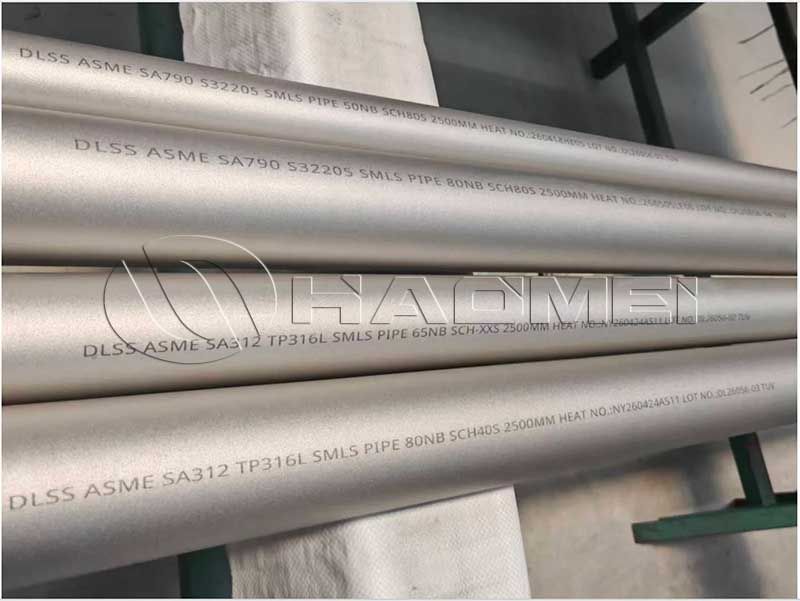
Once the material is determined, the seamless ss pipe dimensions directly determines the actual load-bearing strength of the pipeline. For the same material, differences in pipe diameter, wall thickness, and standard wall thickness grade (Sch grade) will result in vastly different pressure resistance and impact resistance. Marine pipe size selection must adhere to the core principle of "matching wall thickness to operating pressure and matching pipe diameter to flow rate."
1. Matching Wall Thickness and Pressure Strength
The core of the pressure resistance of marine stainless steel pipes depends on the wall thickness. The industry-standard Sch wall thickness grade adapts to different pressure conditions. For conventional low-pressure seawater and water supply/drainage pipelines, standard Sch40 wall thickness pipes are sufficient to meet strength requirements. Medium- and high-pressure steam and hydraulic pipelines require upgraded Sch80 thicker wall pipes to enhance resistance to high-pressure impact.
Taking a commonly used 114mm outer diameter pipe as an example, 316L material with a Sch40 wall thickness can withstand 1.6MPa of conventional seawater pressure, suitable for ordinary ship water supply and drainage; Sch80 thicker pipes can withstand pressures exceeding 2.5MPa, suitable for high-pressure circulation pipelines. However, 310S high-temperature pipelines must use thicker wall specifications to offset the increased toughness and decreased rigidity of the pipe material at high temperatures, preventing pipeline deformation and leakage under high temperature and pressure.
2. Matching Pipe Diameter with Operating Load
Pipe diameter selection does not directly change the strength of the pipe material itself, but it affects the overall operating load and stress state of the pipeline. Small auxiliary pipelines and instrument sampling pipelines on ships commonly use small-diameter pipes of DN15-DN25, which are compact in structure and have high vibration resistance. Main seawater and fuel oil transportation pipelines use medium-to-large-diameter pipes of DN50-DN150, which must be matched with standard wall thicknesses to avoid pressure-bearing weaknesses caused by thin walls in large diameter pipes.
Meanwhile, marine pipes typically cover a full range of outer diameters from 6mm to 2500mm. Seamless pipes have superior overall strength compared to welded pipes. Seamless stainless steel pipes must be used in core operating conditions involving high pressure, high temperature, and high corrosion to eliminate safety hazards caused by insufficient weld strength.
Original source: https://www.marinesteelpipe.com/a/what-strength-is-required-for-marine-stainless-steel-pipes.html
Prev: What Are Corrosion-resistant Stainless Steel Tubing for Offshore Platforms
Next: What Are the Choices Of Stainless Steel Ship Piping
Related Product
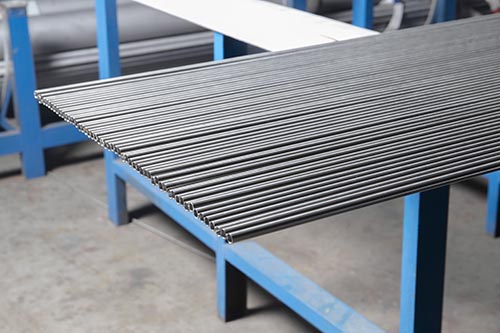
Unlike ordinary civilian stainless steel pipes, the strength, corrosion resistance, and structural stability of marine stainless steel pipes directly determine the safety of ship navigation and the service life of the pipeline. Many ship maintenance and procurement personnel are often confused: what strength standards do marine stainless steel pipes need to meet? Should 316L or 310S be selected for different operating conditions?
I. Core Strength Judgment Standards for Marine Stainless Steel Pipes
The strength of marine stainless steel pipes is not a single numerical value. The industry mainly uses four core indicators as the judgment criteria: tensile strength, yield strength, high-temperature strength, and compressive strength.
Simultaneously, it must comply with GB/T 5312 standard for marine steel pipes and ASTM A312 general specification for stainless steel pipes, adapting to different scenarios such as nearshore, ocean-going, engine room high-temperature, and seawater transportation.
The basic strength threshold for conventional room-temperature marine pipelines is: tensile strength ≥ 485MPa, yield strength ≥ 170MPa, elongation ≥ 40%, meeting the requirements of conventional water pressure impact and structural vibration loads on ships.
For special operating conditions such as high temperature and high pressure steam in the engine room, and exhaust gas emissions, higher requirements are placed on the high-temperature tensile strength and creep resistance of the pipes. Ordinary stainless steel pipes are not suitable, and special high-temperature resistant stainless steel materials must be selected.
In addition, the strength of marine pipes must be linked to their corrosion resistance. Seawater chloride ion corrosion and marine atmospheric salt spray corrosion will continuously reduce the pipe wall thickness and damage the metal structure. Long-term use will lead to a significant decrease in the effective strength of the pipes. Therefore, the selection of marine pipes must consider both initial mechanical strength and strength stability after corrosion.
II. Strength Comparison of Mainstream Marine Stainless Steel Materials: 316L vs 310S
Ordinary 304 stainless steel pipes are rarely used in the marine industry. Currently, the mainstream suitable materials are 316L low-carbon stainless steel and 310S high-temperature resistant stainless steel. The strength characteristics and suitable operating conditions of these two materials differ greatly, which is the core key to the selection of marine piping.
1. 316L Stainless Steel Pipe
TP310s is the preferred material for marine seawater pipelines, water supply and drainage pipelines, and hydraulic auxiliary pipelines. Belonging to the low-carbon molybdenum austenitic stainless steel family, its core advantage lies in its balance of high strength at room temperature and excellent resistance to chloride ion corrosion, making it perfectly suited for the corrosive marine environment.
In terms of strength parameters, 316L has a tensile strength ≥485MPa and a yield strength ≥170MPa at room temperature, fully meeting the pressure and vibration resistance requirements of most marine pipelines at room temperature. Its low-carbon composition effectively avoids carbide precipitation during welding, eliminating intergranular corrosion problems. The strength stability after welding is almost unaffected, making it suitable for on-site welding and installation on ships.
Regarding operating conditions, 316L can operate stably within the normal marine temperature range of -20℃ to 80℃ and can withstand short-term temperature shocks up to 871℃. It is suitable for medium- and low-temperature, high-corrosion conditions such as seawater transportation, tank water supply and drainage, and cryogenic fuel transportation on ocean-going vessels. It is a general-purpose pipe material for civilian ships, cargo ships, and offshore vessels.
2. 310S Stainless Steel Pipe
310S pipe is a high-chromium, nickel-containing, high-temperature resistant austenitic stainless steel with a chromium content of 24-26% and a nickel content of 19-22%. It is a specialized material for high-temperature pipelines in ships, with core advantages including stable high-temperature strength, resistance to thermal creep, and resistance to high-temperature oxidation, compensating for the insufficient high-temperature strength of 316L.
In terms of strength, the room-temperature mechanical strength of 310S is basically equivalent to that of 316L, but its high-temperature strength advantage is extremely prominent: its tensile strength remains ≥200MPa at 800℃, allowing for continuous operation at 1150℃ for extended periods, and intermittent use at temperatures up to 1200℃. It does not exhibit softening, sudden strength drop, deformation, or cracking at high temperatures.
In terms of operating condition adaptability, 310S tube is specifically designed for high-temperature core pipelines in ships, including engine room exhaust pipes, boiler steam pipes, high-temperature fuel oil pipes, and engine cooling pipes—situations where they are constantly subjected to high temperatures and alternating thermal loads. It is an essential pipe material for large ocean-going vessels, engineering vessels, and special-purpose vessels. However, its resistance to seawater corrosion at normal temperatures is slightly inferior to 316L, making it unsuitable for use in purely seawater corrosion conditions.
III. Key Considerations for Marine Seamless SS Pipe Dimensions Based on Strength Requirements
Once the material is determined, the seamless ss pipe dimensions directly determines the actual load-bearing strength of the pipeline. For the same material, differences in pipe diameter, wall thickness, and standard wall thickness grade (Sch grade) will result in vastly different pressure resistance and impact resistance. Marine pipe size selection must adhere to the core principle of "matching wall thickness to operating pressure and matching pipe diameter to flow rate."
1. Matching Wall Thickness and Pressure Strength
The core of the pressure resistance of marine stainless steel pipes depends on the wall thickness. The industry-standard Sch wall thickness grade adapts to different pressure conditions. For conventional low-pressure seawater and water supply/drainage pipelines, standard Sch40 wall thickness pipes are sufficient to meet strength requirements. Medium- and high-pressure steam and hydraulic pipelines require upgraded Sch80 thicker wall pipes to enhance resistance to high-pressure impact.
Taking a commonly used 114mm outer diameter pipe as an example, 316L material with a Sch40 wall thickness can withstand 1.6MPa of conventional seawater pressure, suitable for ordinary ship water supply and drainage; Sch80 thicker pipes can withstand pressures exceeding 2.5MPa, suitable for high-pressure circulation pipelines. However, 310S high-temperature pipelines must use thicker wall specifications to offset the increased toughness and decreased rigidity of the pipe material at high temperatures, preventing pipeline deformation and leakage under high temperature and pressure.
2. Matching Pipe Diameter with Operating Load
Pipe diameter selection does not directly change the strength of the pipe material itself, but it affects the overall operating load and stress state of the pipeline. Small auxiliary pipelines and instrument sampling pipelines on ships commonly use small-diameter pipes of DN15-DN25, which are compact in structure and have high vibration resistance. Main seawater and fuel oil transportation pipelines use medium-to-large-diameter pipes of DN50-DN150, which must be matched with standard wall thicknesses to avoid pressure-bearing weaknesses caused by thin walls in large diameter pipes.
Meanwhile, marine pipes typically cover a full range of outer diameters from 6mm to 2500mm. Seamless pipes have superior overall strength compared to welded pipes. Seamless stainless steel pipes must be used in core operating conditions involving high pressure, high temperature, and high corrosion to eliminate safety hazards caused by insufficient weld strength.