Marine Stainless Steel Pipe vs Carbon Steel Pipe Which Is Better
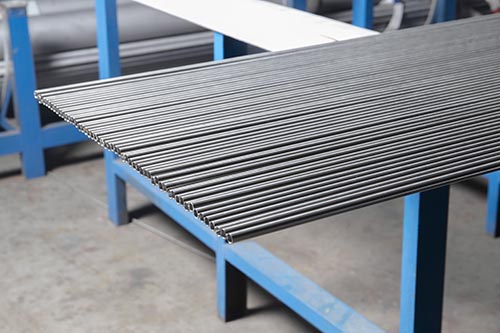
Marine pipelines are the "blood vessels" of a ship's power, water supply and drainage, hydraulic, and fire protection systems. They operate long-term in the harsh marine environment characterized by high salt spray, high humidity, fluctuating temperatures, and seawater erosion. The choice of pipe material directly determines the stability, service life, and maintenance costs of these systems. Currently, the two most commonly used pipe materials in the marine industry are stainless steel and carbon steel. Which is the safer choice?
Material Differences
Marine Carbon Steel Pipes: The core components are iron and carbon, with a carbon content controlled between 0.05% and 2.0%. They contain only small amounts of impurities such as silicon and manganese, and no rust-preventing alloying elements. They are high-purity, simple in composition, and are a traditional general-purpose marine pipe material, emphasizing basic mechanical properties. They are highly malleable and suitable for conventional processing techniques.
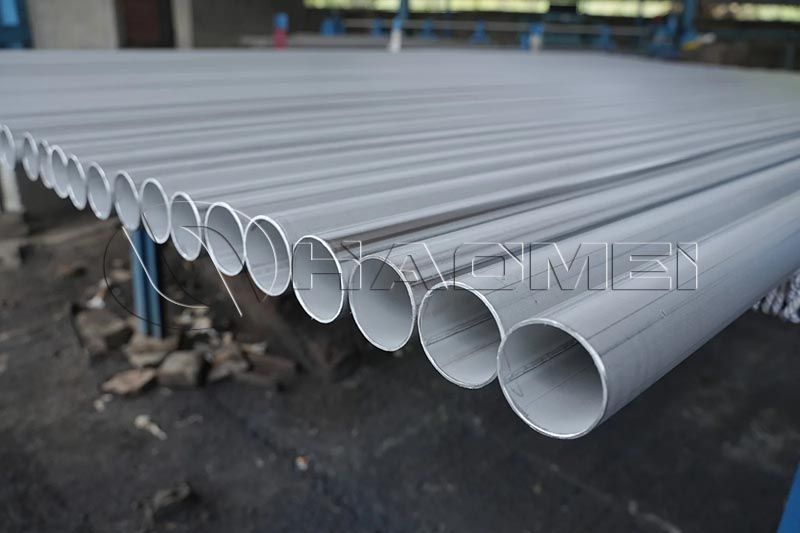
Marine Stainless Steel Pipes: Based on carbon steel, they contain more than 10.5% chromium, along with alloying elements such as nickel and molybdenum (commonly 304 and 316L marine stainless steel). Chromium forms a dense and stable chromium oxide passivation film on the pipe surface, which can self-repair after damage. This is the core reason for its excellent corrosion resistance, making it specifically suited for corrosive marine environments.
Core Performance Comparison
1. Corrosion Resistance
Seawater chloride ions, salt spray, and humid air in the marine environment are the main culprits of pipe corrosion, which is also the most fundamental difference between the two types of pipes.
Carbon steel pipes have extremely poor corrosion resistance and are highly susceptible to oxidation, rust, pitting corrosion, and exfoliation corrosion. Without protection, contact with seawater and salt spray can lead to pipe wall rust, thinning, perforation, and leakage within just a few months. Even with anti-corrosion treatments such as painting and galvanizing, the protective layer is prone to peeling off and failing under the conditions of wave erosion and fluctuating temperature, resulting in frequent corrosion problems later on.
Marine stainless steel tubing, protected by a passivation film, can effectively resist seawater chloride ion erosion, atmospheric oxidation, and acid and alkali corrosion, requiring no additional anti-corrosion coating. Under normal marine operating conditions, its corrosion resistance is 3-5 times that of carbon steel pipes. It will not experience rust or leakage problems during long-term service, making it perfectly suited for highly corrosive environments such as seawater transport, bilge water, and hot and humid compartments.
2. Temperature Toughness and Mechanical Properties
Ships face diurnal and seasonal temperature variations, and some special vessels also need to adapt to extremely cold and high-temperature operating conditions, placing extremely high demands on the temperature adaptability of pipe materials.
Carbon steel pipes have excellent strength and hardness at room temperature and strong pressure resistance, making them suitable for conventional medium and low-pressure pipelines on ships. However, they have significant drawbacks: their strength decreases rapidly at high temperatures, and the long-term operating temperature should not exceed 450℃; they are prone to brittle fracture at low temperatures and have poor low-temperature toughness, making them unsuitable for polar vessels and cryogenic media transport scenarios.
Stainless steel pipes have an extremely wide temperature range adaptability, maintaining stable structural strength at high temperatures, exhibiting excellent oxidation resistance, and withstanding temperatures above 700℃. At low temperatures, they do not exhibit cold brittleness, possess excellent toughness, and demonstrate stronger resistance to fatigue and alternating loads, making them suitable for the complex operating conditions of ships under long-term turbulence and vibration, resulting in superior overall mechanical stability.
3. Thermal Conductivity and Wear Resistance
Carbon steel pipes have a higher thermal conductivity and better heat exchange efficiency, making them suitable for conventional heat exchange pipelines on ships. They also have higher hardness and excellent wear resistance, making them suitable for ordinary pipelines subject to media erosion. Stainless steel pipes have moderate thermal conductivity and slightly lower heat exchange efficiency than carbon steel pipes, but their overall material uniformity provides stronger resistance to erosion and stress cracking, resulting in better long-term operational stability.
Processing and Maintenance
1. Welding and Processing Technology
Carbon steel pipes have a low processing threshold and high plasticity. Cutting, welding, and bending processes are mature and can be performed by ordinary welders. No complex heat treatment is required after welding, resulting in high construction efficiency and suitability for large-scale pipeline laying.
Stainless steel pipes require more sophisticated processing techniques. Strict control of heat input during welding is necessary to prevent material sensitization and its impact on corrosion resistance. Some models require solution treatment. This places stringent demands on equipment and operator skills, resulting in longer construction cycles and higher processing costs.
2. Service Life and Maintenance Costs
Carbon steel pipes have low initial purchase costs, but their weakness lies in later maintenance. Under typical marine operating conditions, their service life is only 10-20 years, requiring regular rust removal, repainting, and anti-corrosion inspections and maintenance. Annual maintenance costs are high, and long-term use is prone to leakage and damage due to corrosion, increasing ship repair downtime costs.
Stainless steel pipes have an initial purchase price 30%-60% higher than carbon steel pipes, but require almost no daily anti-corrosion maintenance, only routine inspections. Their service life can reach over 50 years, with extremely low maintenance costs throughout their entire life cycle, resulting in a significant long-term cost-effectiveness advantage.
Selection Criteria
Scenarios Where Carbon Steel Pipes Are Preferred:
They are suitable for low-corrosion-risk, normal-temperature and-pressure, and non-critical pipelines, such as ordinary ventilation ducts in dry areas of ships, freshwater mains, some structural support pipelines, and engineering vessels with limited budgets and short-term service. In these scenarios, corrosion impact is minimal, and carbon steel pipes can meet the requirements, significantly reducing initial construction costs.
Scenarios Where Stainless Steel Pipes Are Preferred:
They are suitable for core pipelines with high corrosion, high and low temperature, and high reliability requirements, including seawater cooling systems, bilge drainage systems, ship fire-fighting pipelines, high-temperature steam pipelines, cryogenic pipelines for polar vessels, and clean water delivery pipelines for food processing vessels. These scenarios have extremely high requirements for pipe stability, sealing, and service life. Stainless steel pipes can effectively avoid corrosion leaks and pipeline damage, ensuring safe navigation.
Original source: https://www.marinesteelpipe.com/a/marine-stainless-steel-pipe-vs-carbon-steel-pipe-which-is-better.html
Prev: Stainless Steel Pipes for Shipbuilding
Next: Stainless Steel Pipe Grades for Marine Applications
Related Product
Marine pipelines are the "blood vessels" of a ship's power, water supply and drainage, hydraulic, and fire protection systems. They operate long-term in the harsh marine environment characterized by high salt spray, high humidity, fluctuating temperatures, and seawater erosion. The choice of pipe material directly determines the stability, service life, and maintenance costs of these systems. Currently, the two most commonly used pipe materials in the marine industry are stainless steel and carbon steel. Which is the safer choice?
Material Differences
Marine Carbon Steel Pipes: The core components are iron and carbon, with a carbon content controlled between 0.05% and 2.0%. They contain only small amounts of impurities such as silicon and manganese, and no rust-preventing alloying elements. They are high-purity, simple in composition, and are a traditional general-purpose marine pipe material, emphasizing basic mechanical properties. They are highly malleable and suitable for conventional processing techniques.
Marine Stainless Steel Pipes: Based on carbon steel, they contain more than 10.5% chromium, along with alloying elements such as nickel and molybdenum (commonly 304 and 316L marine stainless steel). Chromium forms a dense and stable chromium oxide passivation film on the pipe surface, which can self-repair after damage. This is the core reason for its excellent corrosion resistance, making it specifically suited for corrosive marine environments.
Core Performance Comparison
1. Corrosion Resistance
Seawater chloride ions, salt spray, and humid air in the marine environment are the main culprits of pipe corrosion, which is also the most fundamental difference between the two types of pipes.
Carbon steel pipes have extremely poor corrosion resistance and are highly susceptible to oxidation, rust, pitting corrosion, and exfoliation corrosion. Without protection, contact with seawater and salt spray can lead to pipe wall rust, thinning, perforation, and leakage within just a few months. Even with anti-corrosion treatments such as painting and galvanizing, the protective layer is prone to peeling off and failing under the conditions of wave erosion and fluctuating temperature, resulting in frequent corrosion problems later on.
Marine stainless steel tubing, protected by a passivation film, can effectively resist seawater chloride ion erosion, atmospheric oxidation, and acid and alkali corrosion, requiring no additional anti-corrosion coating. Under normal marine operating conditions, its corrosion resistance is 3-5 times that of carbon steel pipes. It will not experience rust or leakage problems during long-term service, making it perfectly suited for highly corrosive environments such as seawater transport, bilge water, and hot and humid compartments.
2. Temperature Toughness and Mechanical Properties
Ships face diurnal and seasonal temperature variations, and some special vessels also need to adapt to extremely cold and high-temperature operating conditions, placing extremely high demands on the temperature adaptability of pipe materials.
Carbon steel pipes have excellent strength and hardness at room temperature and strong pressure resistance, making them suitable for conventional medium and low-pressure pipelines on ships. However, they have significant drawbacks: their strength decreases rapidly at high temperatures, and the long-term operating temperature should not exceed 450℃; they are prone to brittle fracture at low temperatures and have poor low-temperature toughness, making them unsuitable for polar vessels and cryogenic media transport scenarios.
Stainless steel pipes have an extremely wide temperature range adaptability, maintaining stable structural strength at high temperatures, exhibiting excellent oxidation resistance, and withstanding temperatures above 700℃. At low temperatures, they do not exhibit cold brittleness, possess excellent toughness, and demonstrate stronger resistance to fatigue and alternating loads, making them suitable for the complex operating conditions of ships under long-term turbulence and vibration, resulting in superior overall mechanical stability.
3. Thermal Conductivity and Wear Resistance
Carbon steel pipes have a higher thermal conductivity and better heat exchange efficiency, making them suitable for conventional heat exchange pipelines on ships. They also have higher hardness and excellent wear resistance, making them suitable for ordinary pipelines subject to media erosion. Stainless steel pipes have moderate thermal conductivity and slightly lower heat exchange efficiency than carbon steel pipes, but their overall material uniformity provides stronger resistance to erosion and stress cracking, resulting in better long-term operational stability.
Processing and Maintenance
1. Welding and Processing Technology
Carbon steel pipes have a low processing threshold and high plasticity. Cutting, welding, and bending processes are mature and can be performed by ordinary welders. No complex heat treatment is required after welding, resulting in high construction efficiency and suitability for large-scale pipeline laying.
Stainless steel pipes require more sophisticated processing techniques. Strict control of heat input during welding is necessary to prevent material sensitization and its impact on corrosion resistance. Some models require solution treatment. This places stringent demands on equipment and operator skills, resulting in longer construction cycles and higher processing costs.
2. Service Life and Maintenance Costs
Carbon steel pipes have low initial purchase costs, but their weakness lies in later maintenance. Under typical marine operating conditions, their service life is only 10-20 years, requiring regular rust removal, repainting, and anti-corrosion inspections and maintenance. Annual maintenance costs are high, and long-term use is prone to leakage and damage due to corrosion, increasing ship repair downtime costs.
Stainless steel pipes have an initial purchase price 30%-60% higher than carbon steel pipes, but require almost no daily anti-corrosion maintenance, only routine inspections. Their service life can reach over 50 years, with extremely low maintenance costs throughout their entire life cycle, resulting in a significant long-term cost-effectiveness advantage.
Selection Criteria
Scenarios Where Carbon Steel Pipes Are Preferred:
They are suitable for low-corrosion-risk, normal-temperature and-pressure, and non-critical pipelines, such as ordinary ventilation ducts in dry areas of ships, freshwater mains, some structural support pipelines, and engineering vessels with limited budgets and short-term service. In these scenarios, corrosion impact is minimal, and carbon steel pipes can meet the requirements, significantly reducing initial construction costs.
Scenarios Where Stainless Steel Pipes Are Preferred:
They are suitable for core pipelines with high corrosion, high and low temperature, and high reliability requirements, including seawater cooling systems, bilge drainage systems, ship fire-fighting pipelines, high-temperature steam pipelines, cryogenic pipelines for polar vessels, and clean water delivery pipelines for food processing vessels. These scenarios have extremely high requirements for pipe stability, sealing, and service life. Stainless steel pipes can effectively avoid corrosion leaks and pipeline damage, ensuring safe navigation.