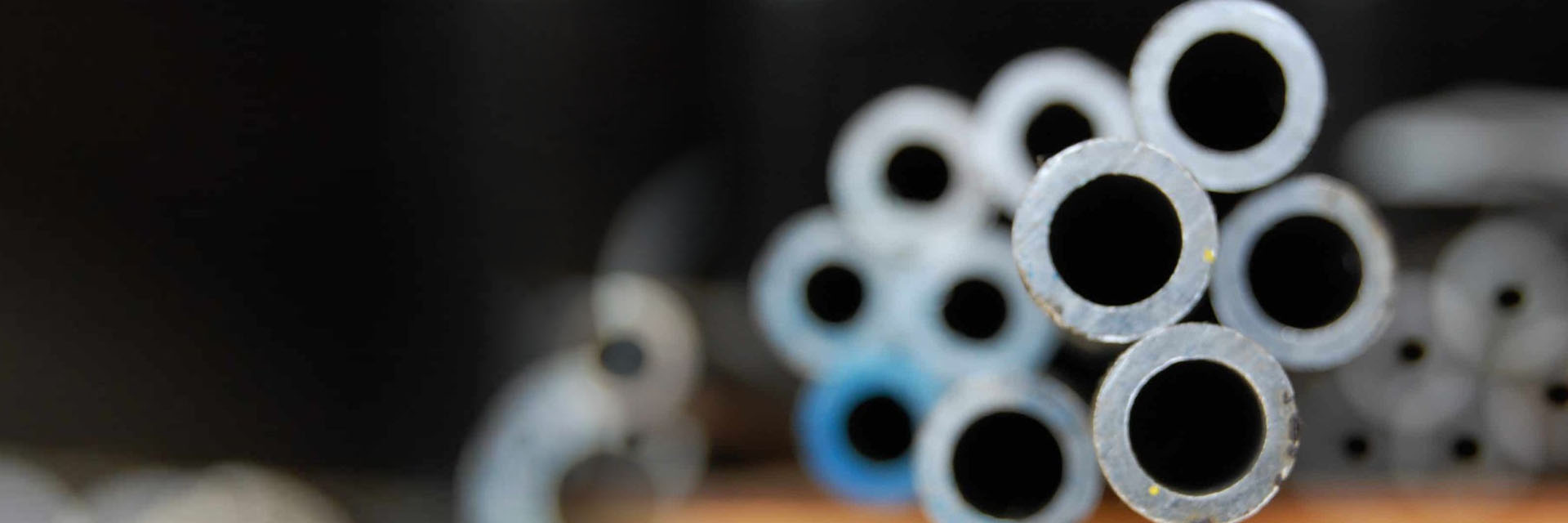
SS Steel Pipe
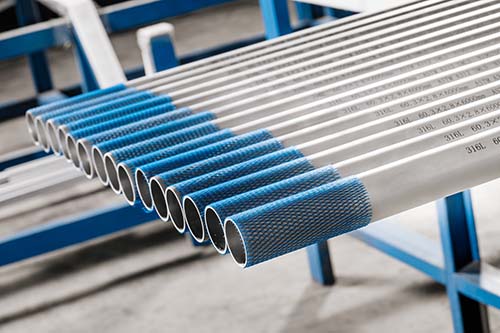
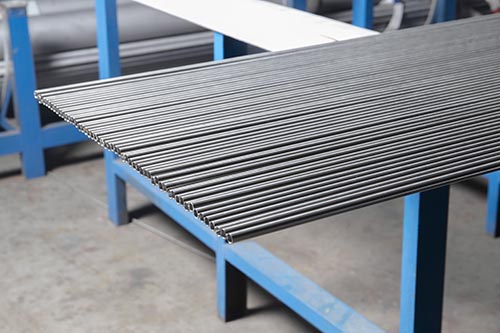
Marine systems operate in one of the most aggressive environments for stainless alloys. Chloride-rich seawater, warm stagnant zones, splash exposure, and crevice deposits can damage an incorrectly specified SS steel pipe even when its surface initially appears sound.
For marine purchasers, corrosion resistance is often the primary concern. Grade selection alone is not enough. Pipe manufacturing method, weld quality, surface condition, heat treatment, test records, and installation details all affect service life.
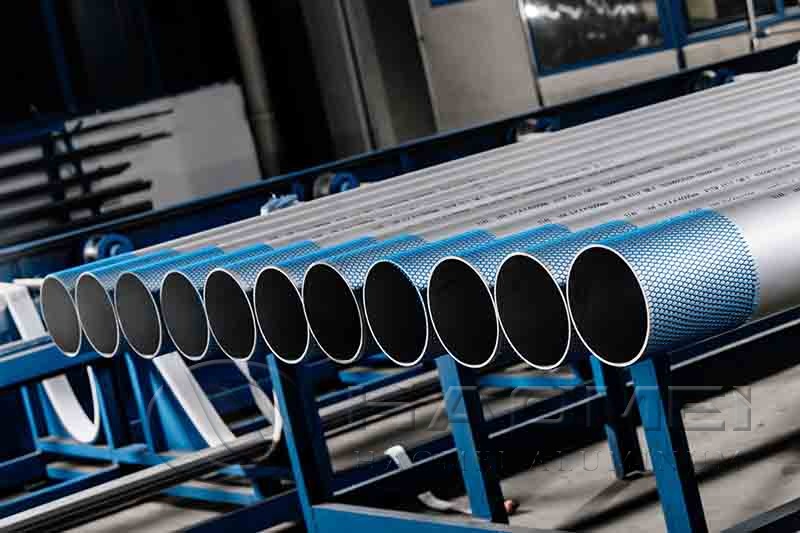
Corrosion Resistance: Why 316L Is Commonly Specified
Type 316L stainless steel is widely used for marine pipework because molybdenum improves resistance to localized chloride attack compared with Type 304L. However, it is not immune to pitting or crevice corrosion. Seawater applications require careful engineering, especially where water is warm, stagnant, oxygen-depleted, or contains deposits.
The "L" designation means low carbon. Under ASTM chemical requirements, 316L generally has a maximum carbon content of 0.030%. Lower carbon reduces the risk of sensitization after welding. Sensitization can reduce corrosion resistance near welds when chromium carbides form at grain boundaries under certain thermal conditions.
A practical specification should state the grade and its governing product standard, rather than naming only "316 stainless." Common standards include ASTM A312/A312M for austenitic stainless steel seamless, welded, and heavily cold-worked pipe; ASTM A269/A269M for general-service seamless and welded tubing; and EN 10216-5 or EN 10217-7 for stainless steel tube products in European projects.
| Marine exposure condition | Typical concern | Practical control |
|---|---|---|
| Open, flowing seawater | Pitting and erosion-corrosion | Select suitable alloy, control velocity, avoid deposits |
| Splash zone | Salt concentration by evaporation | Use cleanable layouts and regular freshwater wash-down |
| Dead legs and stagnant branches | Crevice corrosion | Minimize stagnant sections and provide drainage |
| Welded joints | Heat tint and crevice initiation | Use qualified welding procedures and remove heat tint |
| Insulated pipe | Chloride-bearing moisture under insulation | Specify suitable insulation, sealing, and inspection access |
For highly demanding seawater duties, project engineers may evaluate duplex stainless steels such as UNS S32205/S31803 or super duplex grades. Their suitability depends on design temperature, fabrication controls, chloride level, pressure, and classification requirements. A higher alloy is not automatically safer if welding, pickling, or material traceability is poorly controlled.
Seamless Versus Welded Stainless Pipe for Marine Systems
Both seamless and welded products can be technically suitable when manufactured and tested to the correct standard. The decision should be based on pressure class, dimensional range, fabrication plan, inspection requirements, and corrosion exposure.
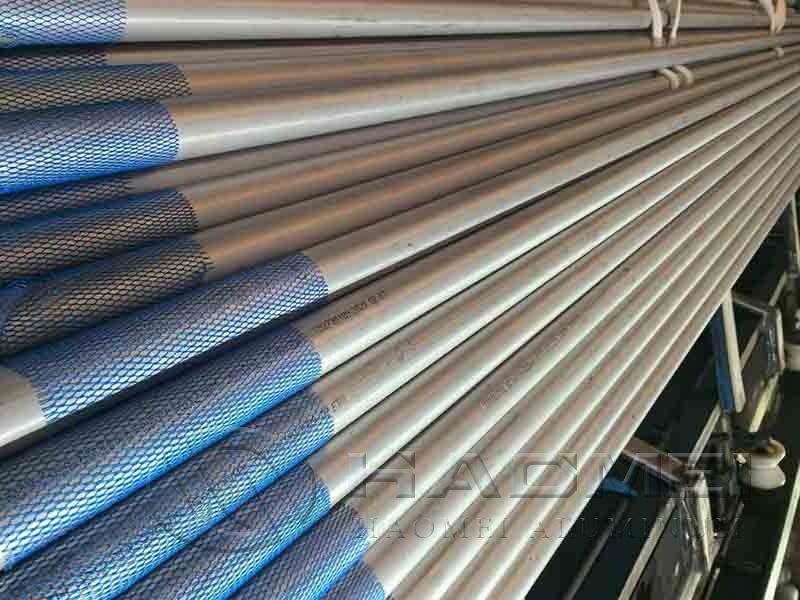
Seamless stainless pipe has no longitudinal weld seam. It is often selected for high-pressure lines, critical process service, compact dimensions, or systems where project specifications require seamless construction. Seamless manufacture can provide strong consistency through the pipe wall, but it does not remove the need for material certification, dimensional inspection, and corrosion-control measures.
Welded stainless pipe is commonly selected for larger diameters and long pipeline runs. Modern welded pipe can meet demanding requirements when the weld is properly produced, solution annealed where required, tested, and documented. For welded pipe, purchasers should clarify whether welds require radiographic examination, eddy-current testing, hydrostatic testing, or other nondestructive examination under the applicable standard and project specification.
ASTM A789 A312 Steel Pipe specifications should be reviewed carefully because ASTM A789 applies to welded and seamless ferritic/austenitic stainless steel tubing, while ASTM A312 applies to austenitic stainless steel pipe. They are not interchangeable descriptions.
| Selection factor | Seamless construction | Welded construction |
|---|---|---|
| Longitudinal seam | No | Present, with weld quality requirements |
| Common use | Higher-pressure or critical services | Larger sizes and general process lines |
| Documentation focus | Heat analysis, dimensions, pressure test | Base material, weld procedure, weld examination, pressure test |
| Marine corrosion focus | Surface finish, deposits, crevices | Surface finish plus weld heat tint and weld-zone cleaning |
Do not specify seamless solely as a corrosion solution. In seawater service, fabrication quality and the avoidance of crevices are usually more influential than the presence or absence of a seam.
Specification Controls That Protect Marine Pipe Projects
A purchase specification should define the material in a way that can be verified before shipment and during installation. At minimum, identify nominal pipe size, schedule or wall thickness, grade, product standard, manufacturing method, end preparation, length tolerance, testing, and certification requirements.
For pressure-retaining systems, align the pipe order with the piping code and classification requirements applicable to the vessel or offshore unit. ASME B31.3 is commonly used for process piping design, while marine projects may additionally require review by organizations such as ABS, DNV, Lloyd's Register, or Korean Register when class scope applies. The classification society's rules and approved drawings take precedence when they impose additional requirements.
Request a material test report meeting EN 10204 Type 3.1 where project documentation requires independently identifiable inspection records. The report should permit traceability from the pipe marking to heat number, chemical analysis, mechanical results, and applicable test results. Positive material identification can provide an additional receiving inspection control, but it does not replace certified chemical analysis or required mechanical testing.
Surface condition deserves a dedicated requirement. Welding heat tint is less corrosion-resistant than properly restored stainless surfaces. After fabrication, qualified pickling and passivation procedures may be specified where compatible with the project, safety controls, and environmental rules. Mechanical grinding alone can leave embedded contamination or an unsuitable surface unless followed by appropriate cleaning and verification.
For quoted pricing, compare like-for-like technical scopes. A low quotation may exclude solution annealing, nondestructive examination, 3.1 certification, pressure testing, bevel preparation, protective packaging, or classification documentation. State the required Incoterms rule and delivery location separately, since freight, insurance, duties, and port charges are outside the mill pipe price.
Marine stainless piping performs best when the specification controls the full chain: alloy chemistry, pipe standard, weld condition, testing, traceability, surface restoration, packaging, and installation geometry. This approach reduces corrosion uncertainty before the pipe enters service.
Original source: https://www.marinesteelpipe.com/a/ss-steel-pipe.html
Prev: Which Metal Is Highly Resistant To Corrosion By Sea Water
Next: Super Duplex Pipe For Oil Wells And Drilling Platform
Related Product
Marine systems operate in one of the most aggressive environments for stainless alloys. Chloride-rich seawater, warm stagnant zones, splash exposure, and crevice deposits can damage an incorrectly specified SS steel pipe even when its surface initially appears sound.
For marine purchasers, corrosion resistance is often the primary concern. Grade selection alone is not enough. Pipe manufacturing method, weld quality, surface condition, heat treatment, test records, and installation details all affect service life.
Corrosion Resistance: Why 316L Is Commonly Specified
Type 316L stainless steel is widely used for marine pipework because molybdenum improves resistance to localized chloride attack compared with Type 304L. However, it is not immune to pitting or crevice corrosion. Seawater applications require careful engineering, especially where water is warm, stagnant, oxygen-depleted, or contains deposits.
The "L" designation means low carbon. Under ASTM chemical requirements, 316L generally has a maximum carbon content of 0.030%. Lower carbon reduces the risk of sensitization after welding. Sensitization can reduce corrosion resistance near welds when chromium carbides form at grain boundaries under certain thermal conditions.
A practical specification should state the grade and its governing product standard, rather than naming only "316 stainless." Common standards include ASTM A312/A312M for austenitic stainless steel seamless, welded, and heavily cold-worked pipe; ASTM A269/A269M for general-service seamless and welded tubing; and EN 10216-5 or EN 10217-7 for stainless steel tube products in European projects.
| Marine exposure condition | Typical concern | Practical control |
|---|---|---|
| Open, flowing seawater | Pitting and erosion-corrosion | Select suitable alloy, control velocity, avoid deposits |
| Splash zone | Salt concentration by evaporation | Use cleanable layouts and regular freshwater wash-down |
| Dead legs and stagnant branches | Crevice corrosion | Minimize stagnant sections and provide drainage |
| Welded joints | Heat tint and crevice initiation | Use qualified welding procedures and remove heat tint |
| Insulated pipe | Chloride-bearing moisture under insulation | Specify suitable insulation, sealing, and inspection access |
For highly demanding seawater duties, project engineers may evaluate duplex stainless steels such as UNS S32205/S31803 or super duplex grades. Their suitability depends on design temperature, fabrication controls, chloride level, pressure, and classification requirements. A higher alloy is not automatically safer if welding, pickling, or material traceability is poorly controlled.
Seamless Versus Welded Stainless Pipe for Marine Systems
Both seamless and welded products can be technically suitable when manufactured and tested to the correct standard. The decision should be based on pressure class, dimensional range, fabrication plan, inspection requirements, and corrosion exposure.
Seamless stainless pipe has no longitudinal weld seam. It is often selected for high-pressure lines, critical process service, compact dimensions, or systems where project specifications require seamless construction. Seamless manufacture can provide strong consistency through the pipe wall, but it does not remove the need for material certification, dimensional inspection, and corrosion-control measures.
Welded stainless pipe is commonly selected for larger diameters and long pipeline runs. Modern welded pipe can meet demanding requirements when the weld is properly produced, solution annealed where required, tested, and documented. For welded pipe, purchasers should clarify whether welds require radiographic examination, eddy-current testing, hydrostatic testing, or other nondestructive examination under the applicable standard and project specification.
ASTM A789 A312 Steel Pipe specifications should be reviewed carefully because ASTM A789 applies to welded and seamless ferritic/austenitic stainless steel tubing, while ASTM A312 applies to austenitic stainless steel pipe. They are not interchangeable descriptions.
| Selection factor | Seamless construction | Welded construction |
|---|---|---|
| Longitudinal seam | No | Present, with weld quality requirements |
| Common use | Higher-pressure or critical services | Larger sizes and general process lines |
| Documentation focus | Heat analysis, dimensions, pressure test | Base material, weld procedure, weld examination, pressure test |
| Marine corrosion focus | Surface finish, deposits, crevices | Surface finish plus weld heat tint and weld-zone cleaning |
Do not specify seamless solely as a corrosion solution. In seawater service, fabrication quality and the avoidance of crevices are usually more influential than the presence or absence of a seam.
Specification Controls That Protect Marine Pipe Projects
A purchase specification should define the material in a way that can be verified before shipment and during installation. At minimum, identify nominal pipe size, schedule or wall thickness, grade, product standard, manufacturing method, end preparation, length tolerance, testing, and certification requirements.
For pressure-retaining systems, align the pipe order with the piping code and classification requirements applicable to the vessel or offshore unit. ASME B31.3 is commonly used for process piping design, while marine projects may additionally require review by organizations such as ABS, DNV, Lloyd's Register, or Korean Register when class scope applies. The classification society's rules and approved drawings take precedence when they impose additional requirements.
Request a material test report meeting EN 10204 Type 3.1 where project documentation requires independently identifiable inspection records. The report should permit traceability from the pipe marking to heat number, chemical analysis, mechanical results, and applicable test results. Positive material identification can provide an additional receiving inspection control, but it does not replace certified chemical analysis or required mechanical testing.
Surface condition deserves a dedicated requirement. Welding heat tint is less corrosion-resistant than properly restored stainless surfaces. After fabrication, qualified pickling and passivation procedures may be specified where compatible with the project, safety controls, and environmental rules. Mechanical grinding alone can leave embedded contamination or an unsuitable surface unless followed by appropriate cleaning and verification.
For quoted pricing, compare like-for-like technical scopes. A low quotation may exclude solution annealing, nondestructive examination, 3.1 certification, pressure testing, bevel preparation, protective packaging, or classification documentation. State the required Incoterms rule and delivery location separately, since freight, insurance, duties, and port charges are outside the mill pipe price.
Marine stainless piping performs best when the specification controls the full chain: alloy chemistry, pipe standard, weld condition, testing, traceability, surface restoration, packaging, and installation geometry. This approach reduces corrosion uncertainty before the pipe enters service.