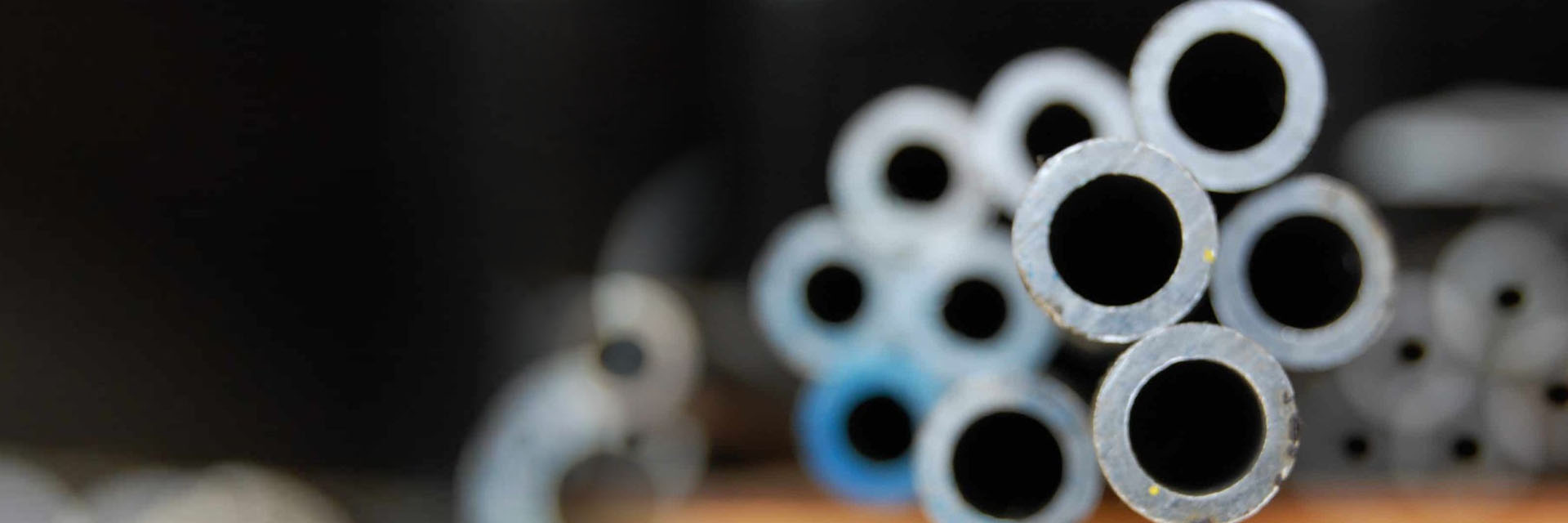
What Are Choices of Structural Steel Tubing For Offshore Platforms
Offshore oil and gas facilities, wind power installations, and drilling platforms operate under harsh conditions characterized by high salinity, high humidity, seawater immersion, and fluctuating pressures. As core structural components—serving as platform supports, fluid transport lines, and equipment connectors—structural steel pipes directly determine the safety, service life, and maintenance costs of offshore platforms.
Unlike conventional onshore steel structures, offshore platform pipes must not only meet high-strength and high-toughness load-bearing requirements but also effectively withstand marine-specific corrosion issues, such as general seawater corrosion, pitting, stress corrosion, and intergranular corrosion.
Currently, structural steel pipes for offshore platforms fall into three main categories: carbon steel, conventional alloy steel, and stainless steel. Among these, stainless steel pipes—valued for their superior corrosion resistance—are widely used in platform topside structures, seawater piping, process piping, and auxiliary load-bearing structures, making them a mainstream material in offshore engineering.
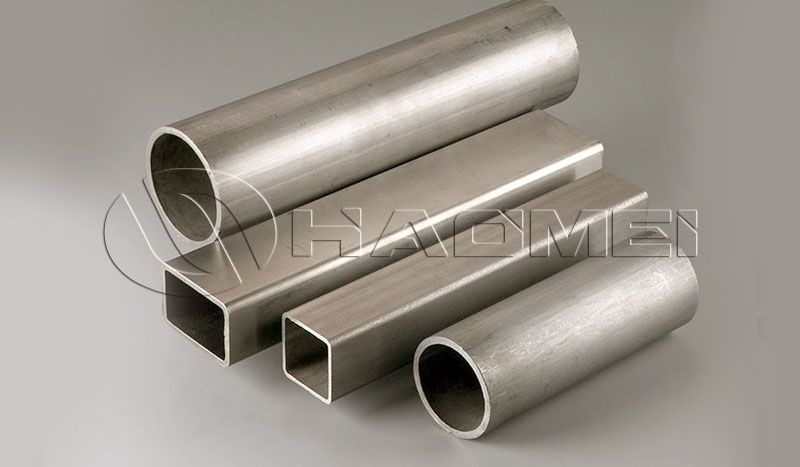
I. General Principles for Selecting Stainless Steel Pipes for Offshore Platforms
Offshore platforms are divided into four distinct zones: the atmospheric zone, the splash zone, the submerged zone, and the buried zone. Each zone presents vastly different corrosion intensities and mechanical loads, which dictate the criteria for pipe selection. Industry selection follows three core principles:
Firstly, corrosion resistance must match operating conditions (with highly corrosion-resistant alloys prioritized for high-chloride seawater environments);
Secondly, mechanical properties must align with loads (requiring high-strength pipes for deep-sea, high-pressure, and long-span load-bearing structures);
Thirdly, fabrication processes must be compatible, meeting requirements for offshore welding, bending, and pressure forming, while also addressing the need for long-term, maintenance-free operation and low maintenance costs.
Conventional, lower-grade stainless steel pipes are unsuitable for the harsh conditions of deep-sea environments. Consequently, the stainless steel pipes currently used on a large scale in offshore platforms are primarily austenitic stainless steel and super duplex stainless steel. Specifically, 316L and S32750 (2507) serve as the two key benchmark materials, suited for standard operating conditions and extremely harsh conditions, respectively.
II. General-Purpose Economical Option: 316L Stainless Steel Pipe (UNS S31603)
316L stainless steel pipe is the most widely used austenitic stainless steel in marine engineering. Thanks to its excellent cost-performance ratio, it is the preferred material for lightweight structures, auxiliary piping, and non-critical load-bearing topside structures on offshore platforms, earning it the reputation of "general-purpose marine-grade stainless steel."
This material is a low-carbon, molybdenum-bearing austenitic stainless steel with a carbon content of ≤0.03%. This composition effectively avoids the intergranular corrosion issues often associated with welding standard 316 stainless steel, offering excellent weldability suitable for offshore field construction.
Compared to 304 stainless steel, the addition of molybdenum significantly enhances resistance to pitting and crevice corrosion; with a Pitting Resistance Equivalent Number (PREN) of approximately 25, it withstands marine salt spray and mild seawater exposure. Additionally, the material exhibits good toughness and ductility, as well as excellent formability, allowing for the fabrication of complex shapes and intricate piping systems.
316L stainless steel offers moderate corrosion resistance for marine environments and is unsuitable for long-term, full immersion in high-pressure deep-sea conditions. It is primarily used in the atmospheric zone and mild splash zone of platforms—covering non-critical, low-pressure, and non-immersed systems such as topside auxiliary structures, equipment supports, fire-fighting and fresh-water lines, instrumentation piping, guardrails, and stair handrails.
Its key advantages include moderate cost, abundant supply, mature welding technology, and ease of maintenance. It is well-suited for standard operating conditions on nearshore, shallow-water platforms, offering exceptional cost-effectiveness for large-scale applications.
However, it has distinct performance limitations: its yield strength is relatively low—only one-third that of S32750 steel—making it unsuitable for high-pressure or heavy-load scenarios. It is also prone to corrosion during prolonged seawater immersion and is strictly prohibited for use in deep-sea subsea pipelines, primary load-bearing structures, or main seawater piping.
III. Material Selection for High-End, Severe Operating Conditions: Super Duplex Stainless Steel UNS S32750 (2507)
Super duplex uns s32750 is a core specialty tubular product for high-end marine engineering. Developed specifically for deep-sea environments characterized by high corrosion, high pressure, and heavy loads, it overcomes the performance limitations of 316L stainless steel and serves as an essential material for deep-water platforms, deep-sea oil and gas facilities, and subsea pipelines.
This steel features a balanced austenite-ferrite duplex microstructure, combining the advantages of austenitic steel (ease of welding and high toughness) with those of ferritic steel (high strength and superior corrosion resistance). With a higher alloy content and a PREN value far exceeding that of 316L, it offers robust resistance to high-chloride seawater, acidic oil and gas media, and various forms of corrosion-induced cracking.
It boasts outstanding mechanical properties, including a yield strength exceeding 550 MPa—three times that of 316L—along with significantly enhanced tensile strength and resistance to external pressure buckling, enabling it to withstand deep-sea high pressures and heavy structural loads. Furthermore, it allows for lightweight pipe wall designs, effectively reducing platform deadweight and construction costs.
S32750 is suitable for harsh environments such as seawater immersion zones, high-pressure deep-sea areas, and highly corrosive process zones. It is widely used in large-scale deep-water platforms, offshore wind turbine pile foundations, and deep-sea oil and gas extraction facilities. Key applications include critical pressure-bearing and corrosion-resistant components such as deep-sea risers, subsea transmission pipelines, primary platform load-bearing structures, main seawater cooling circulation lines, high-pressure process piping, and manifold connectors, making it ideal for operations at depths exceeding 300 meters.
This material offers top-tier comprehensive performance, featuring excellent corrosion resistance, pressure resistance, and deformation resistance. It ensures a long equipment service life and minimal operation and maintenance costs, delivering significant overall benefits for deep-sea engineering projects. However, due to higher raw material and processing costs and stringent welding requirements, it is reserved for core structural components in high-end deep-sea engineering; it is not required for conventional shallow-water applications, thereby avoiding resource waste.
IV. Summary
Regarding material selection, 316L stainless steel is a cost-effective choice for standard nearshore and shallow-water operating conditions, meeting the basic requirements for auxiliary structures on small-to-medium offshore platforms and for general piping; S32750 super duplex stainless steel serves as the core material for demanding deep-sea, high-pressure, and highly corrosive environments, ensuring the long-term safe and stable operation of critical structures in high-end offshore engineering.
In addition to these two mainstream materials, 2205 duplex stainless steel and S32760 high-end super duplex stainless steel see limited application, offering lower versatility and cost-effectiveness. In actual engineering practice, a combined material selection strategy—utilizing 316L for standard structures and S32750 for core structures—is commonly adopted; this approach precisely matches specific operating conditions while effectively balancing engineering quality, safety, and the costs of construction and O&M.
Original source: https://www.marinesteelpipe.com/a/what-are-choices-of-structural-steel-tubing-for-offshore-platforms.html
Prev: Stainless Steel Round Tube
Related Product
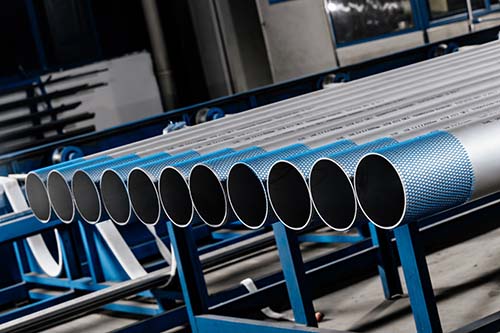
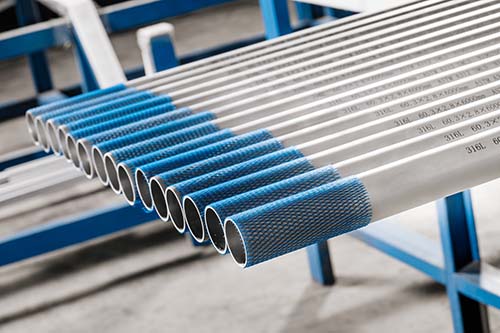
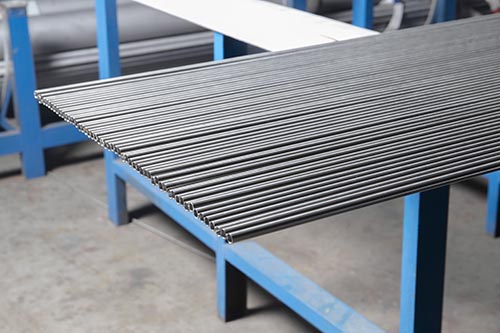
Offshore oil and gas facilities, wind power installations, and drilling platforms operate under harsh conditions characterized by high salinity, high humidity, seawater immersion, and fluctuating pressures. As core structural components—serving as platform supports, fluid transport lines, and equipment connectors—structural steel pipes directly determine the safety, service life, and maintenance costs of offshore platforms.
Unlike conventional onshore steel structures, offshore platform pipes must not only meet high-strength and high-toughness load-bearing requirements but also effectively withstand marine-specific corrosion issues, such as general seawater corrosion, pitting, stress corrosion, and intergranular corrosion.
Currently, structural steel pipes for offshore platforms fall into three main categories: carbon steel, conventional alloy steel, and stainless steel. Among these, stainless steel pipes—valued for their superior corrosion resistance—are widely used in platform topside structures, seawater piping, process piping, and auxiliary load-bearing structures, making them a mainstream material in offshore engineering.
I. General Principles for Selecting Stainless Steel Pipes for Offshore Platforms
Offshore platforms are divided into four distinct zones: the atmospheric zone, the splash zone, the submerged zone, and the buried zone. Each zone presents vastly different corrosion intensities and mechanical loads, which dictate the criteria for pipe selection. Industry selection follows three core principles:
Firstly, corrosion resistance must match operating conditions (with highly corrosion-resistant alloys prioritized for high-chloride seawater environments);
Secondly, mechanical properties must align with loads (requiring high-strength pipes for deep-sea, high-pressure, and long-span load-bearing structures);
Thirdly, fabrication processes must be compatible, meeting requirements for offshore welding, bending, and pressure forming, while also addressing the need for long-term, maintenance-free operation and low maintenance costs.
Conventional, lower-grade stainless steel pipes are unsuitable for the harsh conditions of deep-sea environments. Consequently, the stainless steel pipes currently used on a large scale in offshore platforms are primarily austenitic stainless steel and super duplex stainless steel. Specifically, 316L and S32750 (2507) serve as the two key benchmark materials, suited for standard operating conditions and extremely harsh conditions, respectively.
II. General-Purpose Economical Option: 316L Stainless Steel Pipe (UNS S31603)
316L stainless steel pipe is the most widely used austenitic stainless steel in marine engineering. Thanks to its excellent cost-performance ratio, it is the preferred material for lightweight structures, auxiliary piping, and non-critical load-bearing topside structures on offshore platforms, earning it the reputation of "general-purpose marine-grade stainless steel."
This material is a low-carbon, molybdenum-bearing austenitic stainless steel with a carbon content of ≤0.03%. This composition effectively avoids the intergranular corrosion issues often associated with welding standard 316 stainless steel, offering excellent weldability suitable for offshore field construction.
Compared to 304 stainless steel, the addition of molybdenum significantly enhances resistance to pitting and crevice corrosion; with a Pitting Resistance Equivalent Number (PREN) of approximately 25, it withstands marine salt spray and mild seawater exposure. Additionally, the material exhibits good toughness and ductility, as well as excellent formability, allowing for the fabrication of complex shapes and intricate piping systems.
316L stainless steel offers moderate corrosion resistance for marine environments and is unsuitable for long-term, full immersion in high-pressure deep-sea conditions. It is primarily used in the atmospheric zone and mild splash zone of platforms—covering non-critical, low-pressure, and non-immersed systems such as topside auxiliary structures, equipment supports, fire-fighting and fresh-water lines, instrumentation piping, guardrails, and stair handrails.
Its key advantages include moderate cost, abundant supply, mature welding technology, and ease of maintenance. It is well-suited for standard operating conditions on nearshore, shallow-water platforms, offering exceptional cost-effectiveness for large-scale applications.
However, it has distinct performance limitations: its yield strength is relatively low—only one-third that of S32750 steel—making it unsuitable for high-pressure or heavy-load scenarios. It is also prone to corrosion during prolonged seawater immersion and is strictly prohibited for use in deep-sea subsea pipelines, primary load-bearing structures, or main seawater piping.
III. Material Selection for High-End, Severe Operating Conditions: Super Duplex Stainless Steel UNS S32750 (2507)
Super duplex uns s32750 is a core specialty tubular product for high-end marine engineering. Developed specifically for deep-sea environments characterized by high corrosion, high pressure, and heavy loads, it overcomes the performance limitations of 316L stainless steel and serves as an essential material for deep-water platforms, deep-sea oil and gas facilities, and subsea pipelines.
This steel features a balanced austenite-ferrite duplex microstructure, combining the advantages of austenitic steel (ease of welding and high toughness) with those of ferritic steel (high strength and superior corrosion resistance). With a higher alloy content and a PREN value far exceeding that of 316L, it offers robust resistance to high-chloride seawater, acidic oil and gas media, and various forms of corrosion-induced cracking.
It boasts outstanding mechanical properties, including a yield strength exceeding 550 MPa—three times that of 316L—along with significantly enhanced tensile strength and resistance to external pressure buckling, enabling it to withstand deep-sea high pressures and heavy structural loads. Furthermore, it allows for lightweight pipe wall designs, effectively reducing platform deadweight and construction costs.
S32750 is suitable for harsh environments such as seawater immersion zones, high-pressure deep-sea areas, and highly corrosive process zones. It is widely used in large-scale deep-water platforms, offshore wind turbine pile foundations, and deep-sea oil and gas extraction facilities. Key applications include critical pressure-bearing and corrosion-resistant components such as deep-sea risers, subsea transmission pipelines, primary platform load-bearing structures, main seawater cooling circulation lines, high-pressure process piping, and manifold connectors, making it ideal for operations at depths exceeding 300 meters.
This material offers top-tier comprehensive performance, featuring excellent corrosion resistance, pressure resistance, and deformation resistance. It ensures a long equipment service life and minimal operation and maintenance costs, delivering significant overall benefits for deep-sea engineering projects. However, due to higher raw material and processing costs and stringent welding requirements, it is reserved for core structural components in high-end deep-sea engineering; it is not required for conventional shallow-water applications, thereby avoiding resource waste.
IV. Summary
Regarding material selection, 316L stainless steel is a cost-effective choice for standard nearshore and shallow-water operating conditions, meeting the basic requirements for auxiliary structures on small-to-medium offshore platforms and for general piping; S32750 super duplex stainless steel serves as the core material for demanding deep-sea, high-pressure, and highly corrosive environments, ensuring the long-term safe and stable operation of critical structures in high-end offshore engineering.
In addition to these two mainstream materials, 2205 duplex stainless steel and S32760 high-end super duplex stainless steel see limited application, offering lower versatility and cost-effectiveness. In actual engineering practice, a combined material selection strategy—utilizing 316L for standard structures and S32750 for core structures—is commonly adopted; this approach precisely matches specific operating conditions while effectively balancing engineering quality, safety, and the costs of construction and O&M.